
How do you create + play? Interview with Julie
Oftentimes what we think of as “only a hobby” is really a gentle pathway to prayer. I’ve been so delighted by how often simple, hands-on making becomes a doorway into presence, wonder, and connection with God.
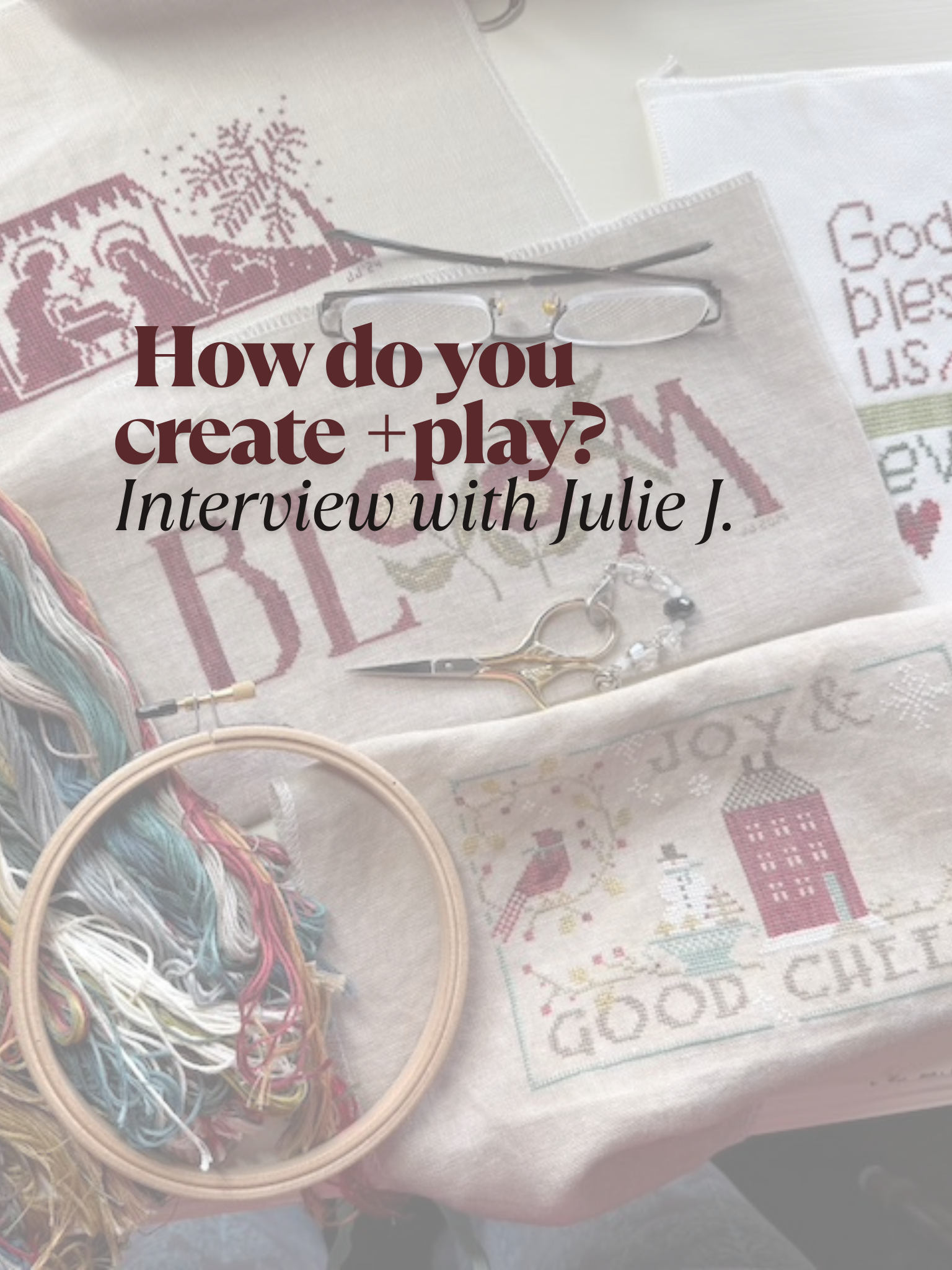
This month, I interviewed someone whose practice has quietly become all of those things. Through cross-stitch, she has discovered a rhythm that helps her slow down, notice beauty, remember her seasons, and connect with others in meaningful ways.
Her story is a reminder that creativity is sacred. Sometimes the slow, repetitive work of making something with your hands becomes a way of making space in your soul. I hope you enjoy and are encouraged.
What first drew you to cross-stitching — and what keeps you coming back to it now?
I learned to cross stitch when I was in high school. My cousin picked up the hobby, and I was drawn to her pieces. There was something peaceful about it, perhaps reminding me of times long ago. I recognized beauty in the labour of it - the hours of handwork it requires. So, she taught me. I stitched for a time, but life got busy and I lost interest.
Years later, I visited a friend in her home and noticed a gorgeous, cross-stitched piece on her wall. It sparked my interest again.
Today my stitching is different. Tastes/preferences change, of course, but I have also become much more creative with it. I love the variety of textures and colors. I've discovered beautiful hand-dyed linens and flosses that allow me to design or adapt projects. Also, some projects just make my heart happy. I know that sounds silly, but it's true. I have completed projects on occasion that left me sad to be finished. I just enjoyed working on them. I think that is what draws me back.
What happens in you when you’re stitching — what do you notice, feel, or pay attention to?
Stitching is rhythmic, almost like breathing. It is comforting, calming and orderly, requiring only a bit of focus to count stitches and follow a pattern. It usually doesn't require too much brain power, allowing my mind to ponder other things alongside. They say that when we do repetitive tasks, we think more clearly. I believe this is true! Going for a walk can clear your head and so can stitching.
You sometimes stitch in community — what do you think happens when people make things side by side?
This is new for me within the last 18 months. We have a local cross stitch store that is always buzzing with ladies AND men (yes, men cross stitch too). It is a place of encouragement and conversation. Our particular group meets weekly to stitch, usually for 3 or 4 hours. We admire each other's WIPs (work-in-progress), inspire one another to expand our abilities, and mostly just chat about life. I find connection with people I have nothing else in common with except stitching, and we have a wonderful time!
The cross-stitch community is big. There are large stitching retreats in conference centers and ballrooms all over the US, Canada and Europe. Stitch-Con, one of the largest, sells out every year. These retreats feature designers who share their purposeful designs alongside stories of meaning. And of course, these retreats offer hours and hours of time to stitch with others.
Has cross-stitching ever helped you slow down, notice beauty, or connect with something bigger than yourself?
Absolutely! Whatever I am stitching sets a mood. When I stitched a "names of Christ" sampler, I pondered each name. When stitching the wisdom prayer, I was in prayer. When stitching a gift for someone, I am mindful of that person and grateful for that relationship. And of course, stiching flowers, bees, trees, birds etc. give me a sense of beauty that is all around us. It reminds me to notice.
It's interesting, my completed pieces are reminders of life's past seasons. One piece was calming to me when nervous on an airplane. There is a piece I worked on while at the hospital bedside of my father-in-law. The stitching was slow and lingering that day, stitching while he slept. I can probably tell you when I stitched most of my projects and can relate them to what was happening around me.
If you can imagine Jesus sitting beside you while you cross-stitch, what do you think he is doing/saying/thinking?
Is there anything better than sitting with Jesus and simply enjoying His presence? I imagine Him just being there, enjoying the moment with me. Nothing needs to be said because His presence is deeper than words. Mostly, I feel His pleasure, and I am assured of His love.
What would you say to someone who wishes they could create like that, but doesn’t know where to start?
One can learn a lot from Flosstube videos (on YouTube). There are many talented stitchers offering inspiration and instruction with a wide variety of design style. Be careful though - this can suck you in! I would suggest, if possible, finding a cross stitcher or a local needlework store that can offer instruction or tips. Start with something small on Aida 14-count fabric. Patterns can be ordered online and some are even offered free. Find one that makes your heart nsging. Hobby Lobby or Michaels have DMC floss, needles and hoops.
Most important is how you approach a project. While certainly there is a sense of accomplishment from finishing a piece, there is much joy in the process of creating. Linger in it!
Thank you again, Julie, for sharing your hobby and wisdom with us!
I am hoping to continue with this series and send each person off with a blessing of their hobby. So Julie, here is my prayer for you:
Creative God, thank you for planting your creativity in us, so that when we create, we join you in holy play. Bless the holy play of cross-stitching in Julie’s hands. May she feel your full delight in her, your precious daughter, as she echoes your creativity. May her cross-stitching community grow and bring you glory. And may your love and peace surround her, flow through her, and touch others who are with her, with every stitch she makes.


Entering Contemplative Play
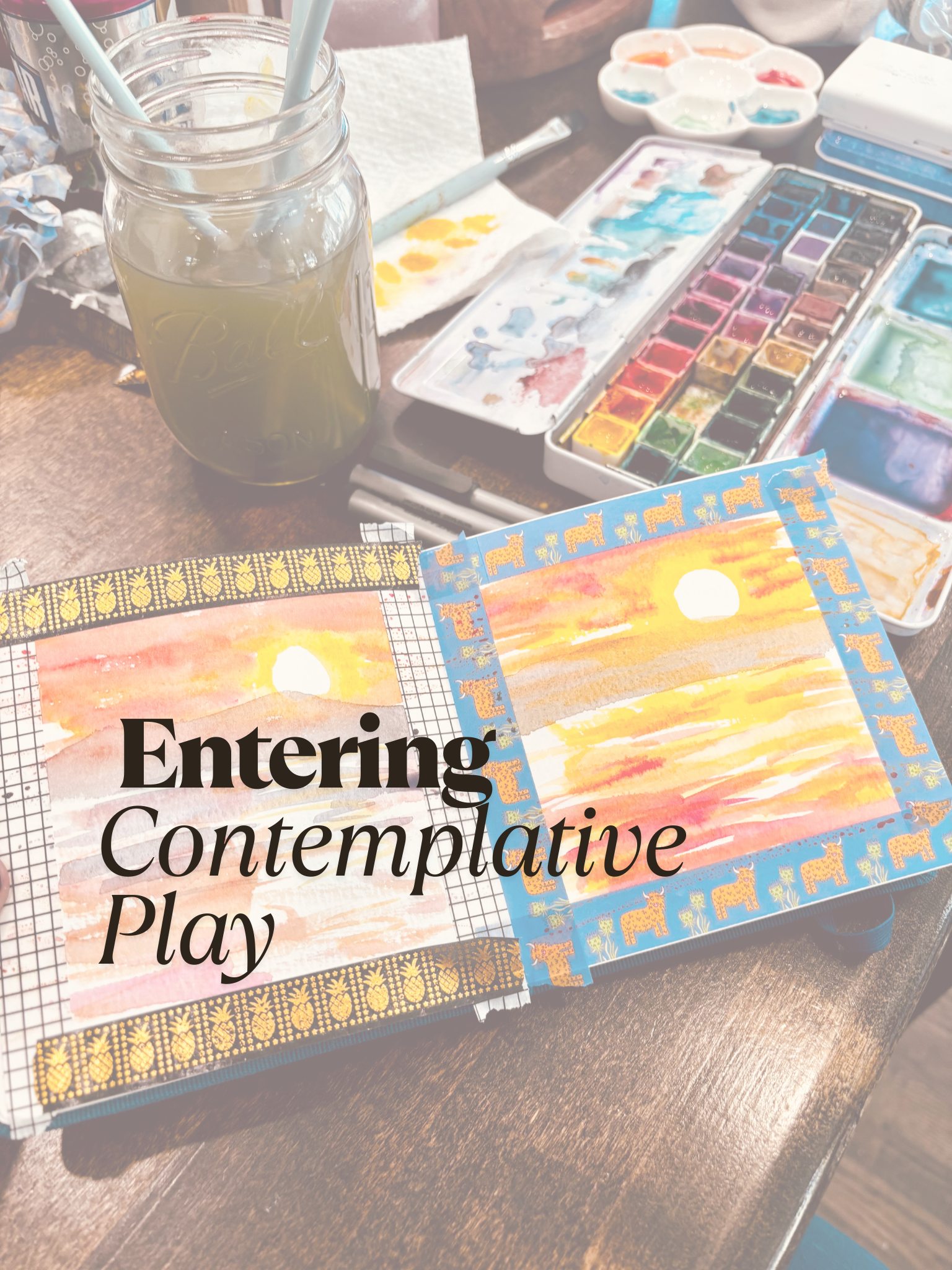
Contemplative play gives us a way to be fully present without the pressure to perform or produce. It slows us down enough to notice what is true, what is beautiful, and what is stirring inside us. In a world that prizes achievement and efficiency, contemplative play helps us recover wonder.
It’s not about following steps or achieving a result. It’s about showing up with openness and letting yourself notice, wonder, and be.
The ideas below are simply starting points, invitations into a slower rhythm. You might use one, combine a few, or let them spark something entirely your own. What matters most is not what you make, but how you attend to the moment.
Below are a few ways to enter contemplative play, alone or in community, with hands, heart, and imagination awake to God’s presence.
Ideas for Contemplative Play
Color slowly with crayons, markers, or watercolor. Don’t worry about staying in the lines.
Shape clay or playdough with your hands; see what forms naturally.
Go outside and collect a few interesting leaves, stones, or sticks. Arrange them in a small pattern.
Sit under a tree or near a window and watch what moves, whether it’s clouds, light, leaves, or shadows.
Take a slow walk, noticing what you see, hear, and feel as you move.
Light a candle and watch the flame for a minute or two.
Trace a spiral or simple shape in sand, salt, or rice with your finger.
Draw or paint what peace, love, or hope might look like to you.
Write a short thank-you note to God or to someone who showed you kindness.
Listen to gentle music and let your hands or body move with it.
Build something out of blocks, rocks, or Legos.
Close your eyes and take five deep breaths, noticing what you feel in your body.
Look closely at something small like a flower, a piece of fabric, or a shell and notice every detail.
Share something you made or noticed with someone else and listen to what they share.
Pour water slowly from one cup to another and listen to the sound it makes.
Lightly trace your hand on paper and fill it with small drawings or words of gratitude.
Look up at the sky for a full minute and notice how it changes.
Tear or cut paper pieces and glue them into a collage without planning the outcome.
Walk a simple path, spiral, or labyrinth, pausing at the center to take a deep breath before returning.
Stack stones or small objects, noticing when the balance feels right.
Blow bubbles and watch them drift and disappear.
Write a single word that feels important today and decorate around it with color or pattern.
Trace a heart shape on paper or in the air and imagine offering your love to God.
Sit quietly with your eyes closed and imagine light filling the room.
Draw or color together with someone, side by side, without talking.
Hold a smooth stone and think of one thing you’d like to release or let go.
Listen for distant sounds, like birds, wind, cars, or voices and notice how far away they are.
Watch a candle go out, following the smoke as it disappears.
End with a deep breath, thanking God for what you’ve noticed.
These may seem like simple or even silly examples, but that’s kind of the point. We spend so much of our lives producing and performing that we forget how to simply be. So take a little time to pause and play. Choose one small practice and see where it leads. Notice how you feel afterward. You might be surprised by the peace or joy that meets you there.
Making Space (Even when it feels impossible)
Sometimes making space feels impossible. It feels like a luxury, something only people with enough time, money, or resources can do. Something for later, when life slows down a bit.
But in God’s economy, resources are abundant. There is already enough. You are already enough, and you already have what you need to make space for yourself and for Him.
The truth is, the problem isn’t really about resources. It’s about priority. We aren’t used to prioritizing stillness or slowness, especially when it doesn’t feel “productive.” Making space doesn’t check anything off a list. It might not even feel like anything at first.
But it’s holy work.
And it doesn’t have to be dramatic or long or quiet or perfect. Making space might look like:
A few deep breaths before you rush into the next thing
A short prayer whispered while washing dishes
Doing something creative, just for the joy of it
Playing with intentionality
Meeting with a spiritual director
Unplugging for a few minutes or a few hours
Taking a retreat
Making space can be minutes. It can be days. What matters is that we’re intentionally being with God, not just doing things for Him.
The thing about making space, even a few minutes, is that it stretches time. It’s strange but true: time feels fuller, slower, more open. At first, it might feel boring. That’s okay. Keep showing up. Soon those quiet, unhurried minutes will become so precious that you’ll find yourself craving more and more of them.
Maybe that’s the gift: not that we make space once and for all, but that we keep learning how to make it again and again, right where we are.
You are allowed to take up space.

At the beginning of the month, we spend some time talking about making space. It feels like where we should start, because without making space for ourselves and God, there’s really nowhere for us to go (can’t really talk about making art or contemplative play or spiritual direction if you just won’t make space in your schedule!). But I started wondering if we need to go back even further. What if you don’t even believe you are allowed to take up space?
That question has been sitting with me all week.
Because before we make space for God, we have to remember that God already made space for us. He called us into being. He imagined us. He delights when we show up fully, with our quirks and questions and quiet longings.
Maybe the first act of making space is simply to believe this: you belong here. You’re allowed to take up space in your own life. You don’t have to earn it by being useful or creative or holy enough.
So if you need a place to start this month, start there. Take one deep breath and remember that you are here on purpose, loved and wanted by the One who made space for you before the beginning of time. Everything else can grow from that.
sacred story time (changing your mind)
Last time, Pooh began his plan to get the honey from the bees, but there was a problem. This week, Pooh decides he’s had enough.
As we read this week’s passage, I hope you’ll take some time to wonder about what happens when we are wrong about something and how it feels to admit that, especially to the people around us. Come play, pray, and wonder with me.
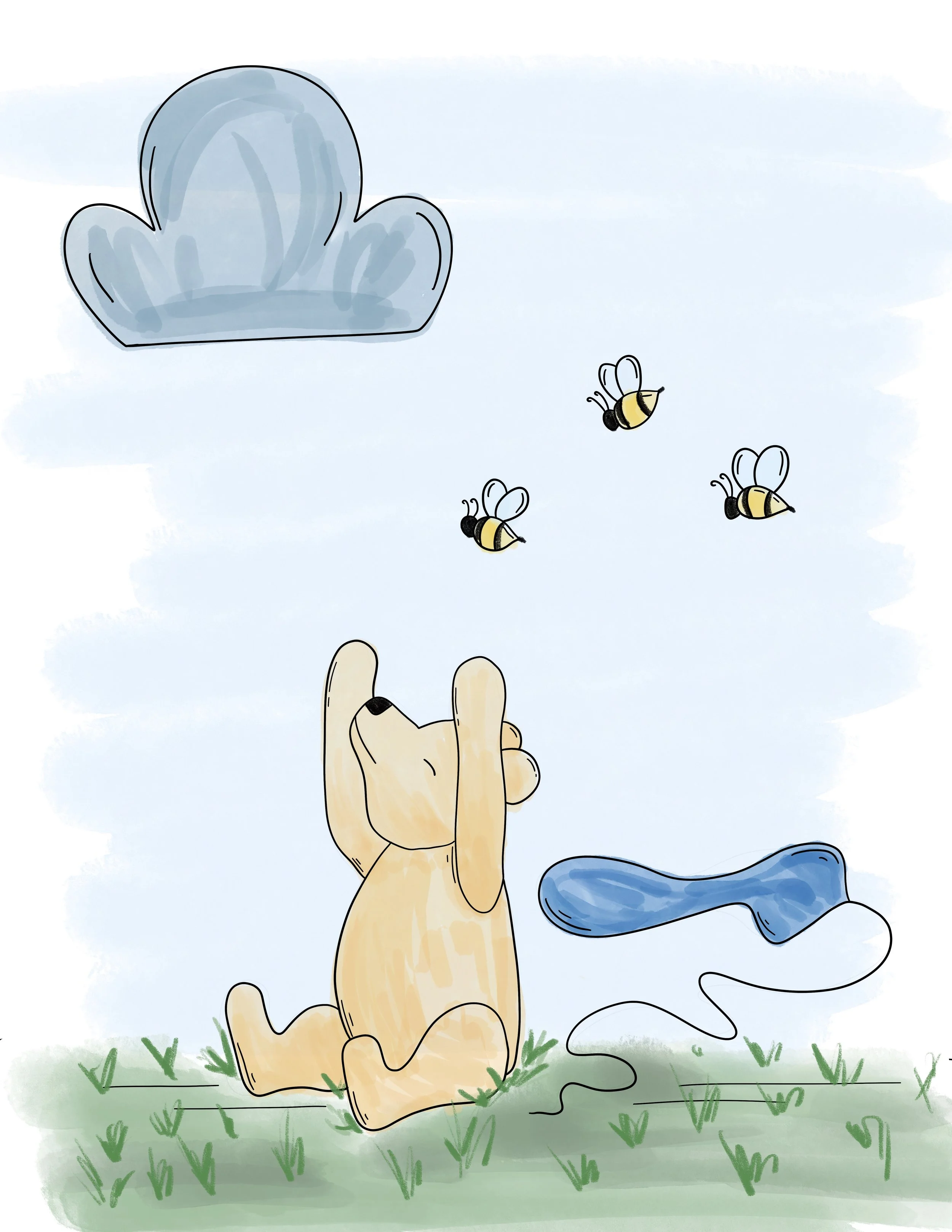
"Christopher—ow!—Robin," called out the cloud.
"Yes?"
"I have just been thinking, and I have come to a very important decision. These are the wrong sort of bees."
"Are they?"
"Quite the wrong sort. So I should think they would make the wrong sort of honey, shouldn't you?"
"Would they?"
"Yes. So I think I shall come down."
"How?" asked Christopher Robin.
Winnie-the-Pooh hadn't thought about this. If he let go of the string, he would fall—bump—and he didn't like the idea of that. So he thought for a long time, and then he said:
"Christopher Robin, you must shoot the balloon with your toy gun. Have you got it with you?"
"I do," Christopher Robin said. "But if I do that, it will spoil the balloon.”
"But if you don't," said Pooh, "I shall have to let go, and that would spoil me."
When he put it like this, Christopher Robin saw how it was, and aimed very carefully at the balloon, and fired.
"Ow!" said Pooh.
"Did I miss?" Christopher Robin asked.
"You didn't exactly miss," said Pooh, "but you missed the balloon."
"I'm so sorry," Christopher Robin said, and tried again, and this time he hit the balloon, and the air came slowly out, and Winnie-the-Pooh floated down to the ground.
But his arms were so stiff from holding on to the string of the balloon all that time that they stayed up straight in the air for more than a week, and whenever a fly came and settled on his nose he had to blow it off. And I think—but I am not sure—that that is why he was always called Pooh.
Noticing Prompt
When was the last time you were wrong about something? Or changed your mind about something you used to believe? How did that make you feel? How did it make the people around you feel? Do you find it hard to admit when you are wrong? If so, why?
Play Prompt
Draw a face on an empty balloon and then blow it up to different sizes. Watch how the face changes! Then let the balloon go and watch it zoom around! How far can you get it to travel?
Imagination Prompt
If you could give yourself any name, what would it be and why?
Prayer
Unchanging God, keep my mind on you and your ways. Let me not be easily offended or always think I know what is best. Help me walk the path of humility.
Download a PDF of this content for a Winnie-the-Pooh coloring page!
Our Sons and Daughters
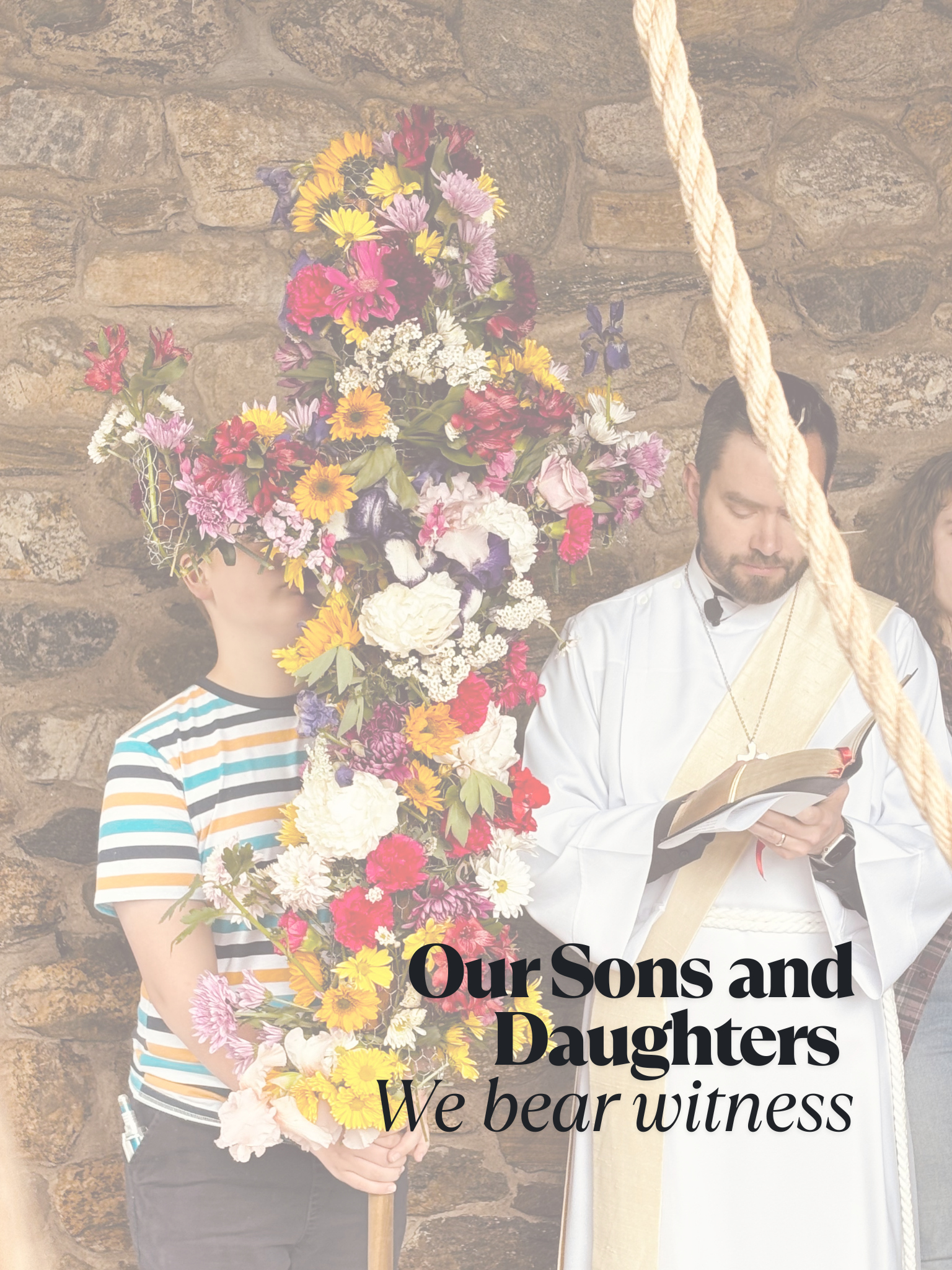
As we sang Pass the Promise in church a few weeks ago, one line caught me in a new way: “our sons and daughters.”
I found myself thinking: what if that means all of our sons and daughters? Not just our own children, but every child in our church family. The kids sitting a few pews over, the ones running around at the back during the service. They belong to all of us.
Every time we gather for worship, we bear witness to them. Our presence, our singing, praying, listening, and showing up week after week tells them something about what we believe.
I told my daughter recently how grateful I am that she is surrounded by people who have already counted the cost of following Jesus and decided it’s worth it. What a gift that is! To grow up in a community filled with living testimonies of faith.
And that’s really what we’re doing every Sunday, passing the promise. Not through perfect words or elaborate lessons, but through the quiet consistency of a life rooted in worship and wonder.
This is part of what I mean when I talk about contemplative play: paying attention to God’s presence in ordinary things, and letting our lives invite others (especially children) to do the same. Church is one of the few places where kids regularly see adults singing, praying, and wondering together and that is formational, for children and adults.
So every Sunday, when we come to church, we’re not just attending a service. We’re quietly showing our sons and daughters, and one another, that we believe this is true. That we have found Jesus worth following.
They’re watching. And our presence bears witness.
Learning Faith From Children
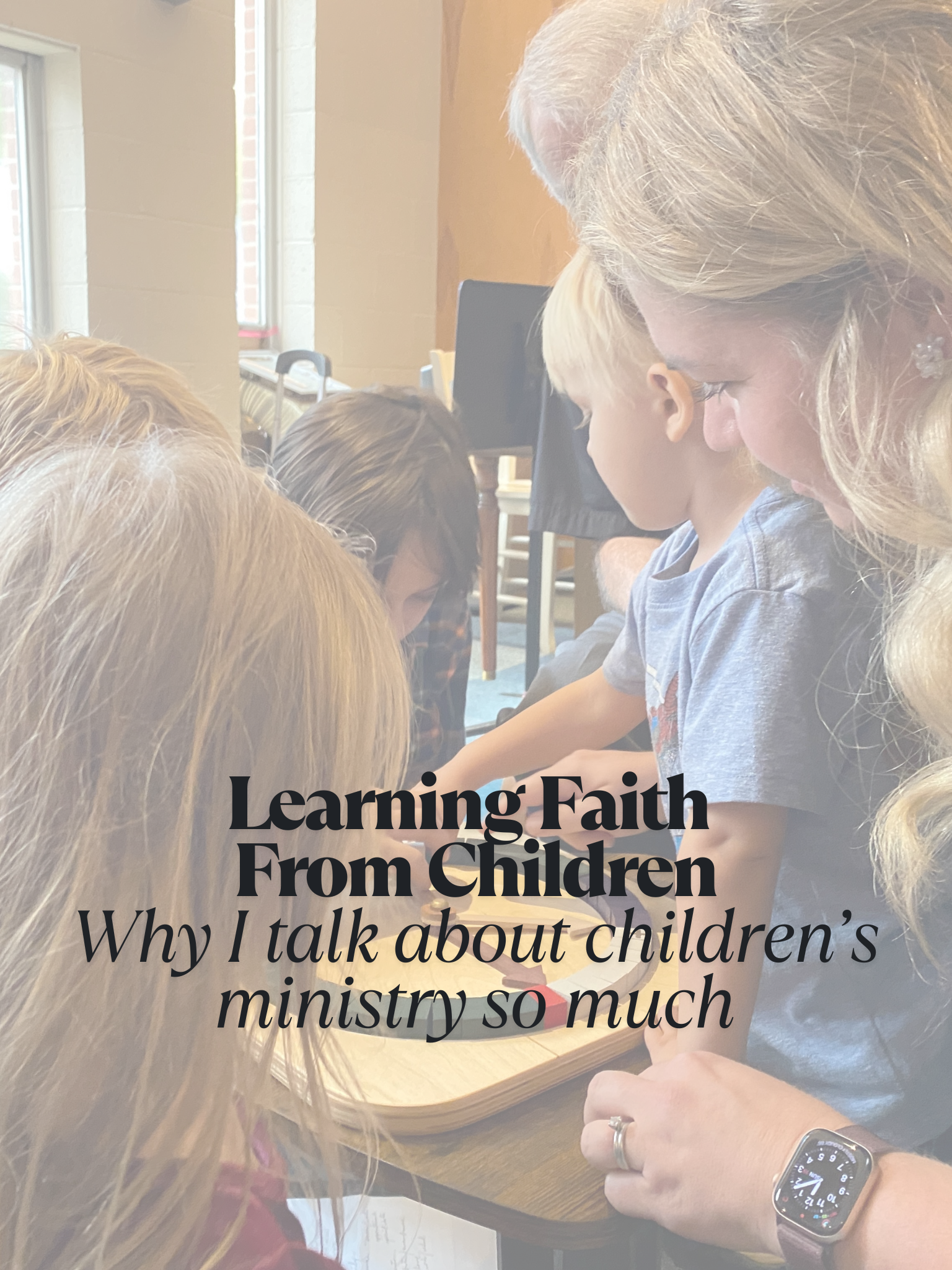
Photo, taken by my friend Beth, of me showing the kids my favorite part of the liturgical calendar, using a tool from Godly Play
I’ve started talking about children’s ministry a lot. Sometimes I’m writing about contemplative prayer or creative practices for adults, and somehow it comes up again.
And it’s not just because it’s my job, though I do love it and have been doing it for ten years now.
No, it’s actually because children’s ministry reminds me of something central to our faith: the way God calls all of us to approach Him, with openness, curiosity, and trust.
When Jesus said, “Unless you change and become like little children, you will never enter the kingdom of heaven,” He wasn’t just talking to kids’ volunteers. He was talking to all of us. It’s a call for all of us to learn humility, wonder, and receptivity to God. It’s a posture of heart that can be cultivated at any age. To enter the kingdom like a child means to stay curious, open, trusting, and willing to play. It means remembering how to approach God with wonder instead of certainty.
In children’s ministry, I watch kids naturally explore, notice, wonder, and create. They don’t need complex explanations about God or prayer; they just engage with the world and the stories of faith with full attention. And as I watch them, I realize that this is the same kind of attentiveness and openness God invites adults into, we just forget how to get there sometimes. It reminds us that part of our calling is to create space: to listen, to wonder, and to let God be present in ordinary moments.
That’s part of why I talk about it so much. Children’s ministry isn’t only about teaching Bible stories or keeping kids busy during worship. It’s spiritual direction in action.
In Godly Play and other similar approaches, we don’t rush to explain or give the “right” answers. We make space, ask wondering questions, and trust that God is already at work. That’s exactly what spiritual direction is for adults too: creating space, listening deeply, and paying attention to how God might be speaking.
When I talk about contemplative play, this is what I mean: making space to engage God through imagination, art, and curiosity. It’s a practice that helps adults reconnect with that childlike posture Jesus talked about. It’s a way for adults to practice openness. It’s about slowing down, engaging your imagination, and noticing God at work around you.
We don’t become like children in a magical or automatic way. Play can be a spiritual discipline, a tool to help us remember how to trust, be curious, and fully show up to God. You don’t have to be “good at art” or have it all figured out. You just have to show up, slow down, and let yourself play a little. It’s another way of listening for God.
That’s why I’ve been talking about children’s ministry so often. It’s not just for kids. It’s a living example of how we can all cultivate a posture of childlike faith: open, attentive, and trusting. Every time we make space for wonder, creativity, and quiet noticing, we’re stepping into the kind of faith Jesus calls us to. Children’s ministry simply reminds us what that looks like in practice.
Creating and Playing as a Christian Practice
As we move from making space into create and play, I’ve been thinking about what this rhythm really means for those of us who follow Jesus. It’s easy to think of creativity as something for artists or people who are “naturally creative,” but the truth is, we all create. It’s part of being made in God’s image.
Here are a few simple ways I think about creativity and play as part of our life with God.

This picture is of a creation made by one of my church kids and I love it. It's a crocheted egg with a tiny Jesus in it. This is also why I talk about children so much: they show us a way. When was the last time you thought, "I'm going to crochet an egg and put a tiny Jesus in it?" Probably not since you were 11, if ever! But look at it. It's joyful and sweet and I love the heart that made this crochet egg and wanted to put a Jesus in it. Let it be your guide to creativity and play today, as you glorify Him in the process.
1. It starts with God’s presence
Before we do anything creative, we start by making space, sitting with God, praying, or just slowing down long enough to be aware that He’s with us. Jesus said, “Abide in me, and I in you” (John 15:4). Creativity flows best when we begin from that place of connection. We don’t create to earn approval; we create because we already have it.
2. Creativity is how we respond to God’s beauty
Creativity isn’t only about art projects. It’s about noticing something beautiful and responding to it. That might look like taking a photo, cooking a meal, singing in the car, arranging flowers, or writing a few lines in your journal. Psalm 19:1 says, “The heavens declare the glory of God.” When we create, in any form, we join that declaration.
3. Play helps us practice noticing
Play is what keeps us from taking ourselves too seriously. It’s how we learn to notice and enjoy what God is doing around us. When we play, when we experiment, explore, or make something just because, it helps us grow more open and curious. That kind of curiosity helps us see God’s hand in ordinary things.
That’s why I share creative prompts, photo prompts, and prayer ideas each month. They’re not about producing something impressive; they’re about giving yourself permission to notice and enjoy God’s goodness.
4. Everything we create can glorify God
In Colossians 3:17, Paul writes, “Whatever you do, in word or deed, do everything in the name of the Lord Jesus.” That means anything—writing, gardening, organizing your home, or helping your kids with a project—can be an act of worship when it’s done with love and gratitude.
Creating and playing aren’t separate from your faith. They’re ways to live it out, right in the middle of everyday life.
So as we move into this new rhythm, here’s something to think about:
What would it look like for you to create or play with God this week?
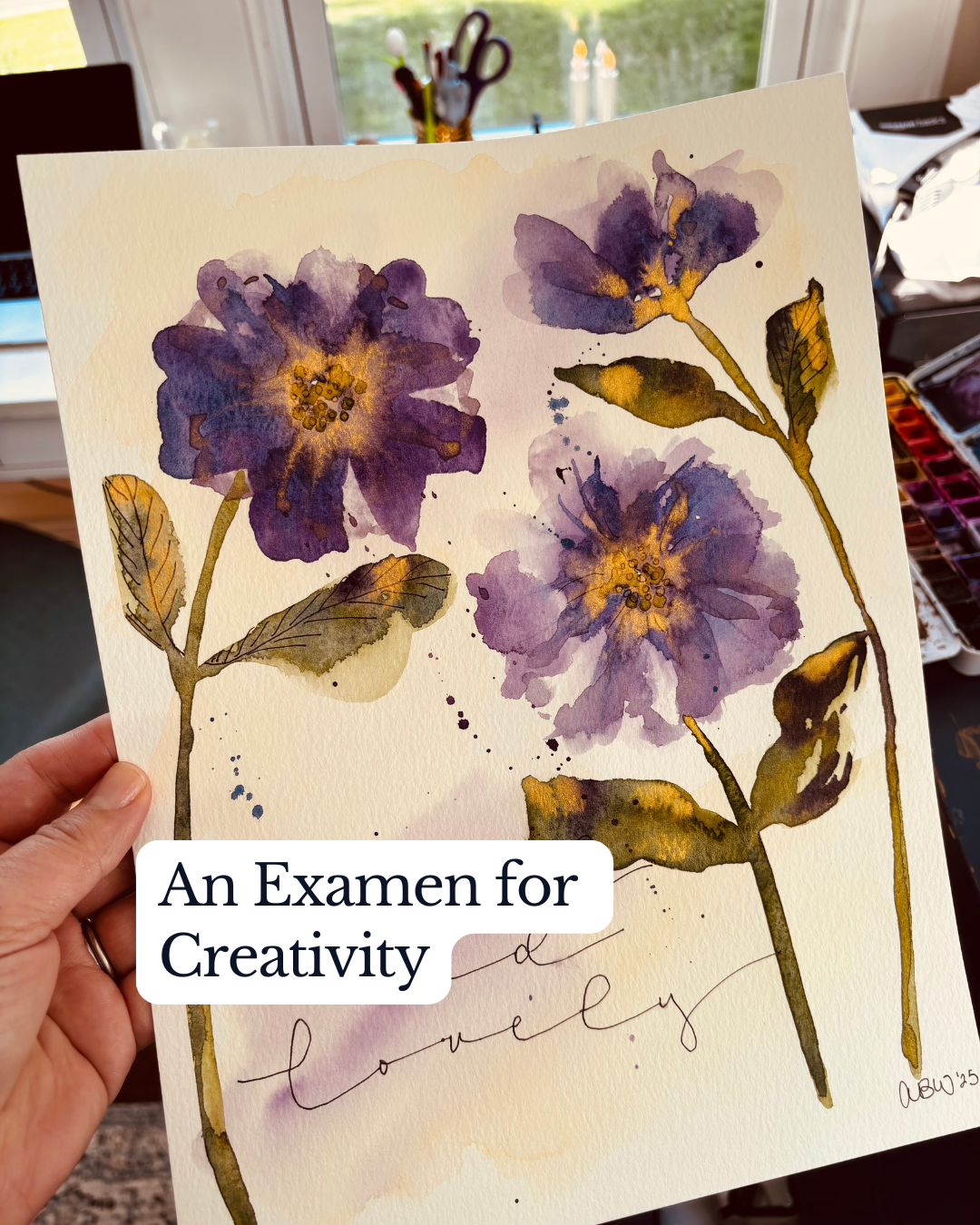
An Examen for Create and Play
I like to think of the Examen as a way to help us just live with intentionality. It’s easy to let the days slip by without any reflection, one day just flowing into the next. But if we want the moments to last, we need to live with intentionality. This is where the Examen helps us. The Examen (from Ignatian spirituality) is a gentle, prayerful reflection on your day, noticing where you experienced God’s presence, gratitude, and invitation to growth. So I thought it might be helpful to have an Examen specifically for our create and play rhythm.
1. Become Still
Take a few breaths.
Invite God’s presence with you.
Maybe pray:
“Creator God, You delight in making all things new. Help me see where I joined You in creation today.”
2. Give Thanks
Reflect on moments of creative joy or play.
What felt life-giving, even in small ways?
When did you feel free, curious, or childlike?
What moment of beauty or imagination felt like a gift?
3. Review the Day (or Week)
Look back through your creative moments:
What did you make, explore, or notice?
Were there times you resisted play or held back?
When did you sense flow, connection, or surprise?
When did you feel blocked, pressured, or disconnected?
Try to see these moments as invitations — not successes or failures.
4. Notice God’s Presence
Where might God have been in your creative process?
Was there a moment you sensed delight, peace, or invitation?
What felt sacred, even if it was messy?
5. Respond and Rest
What invitation do you sense for tomorrow or next week?
How might God be inviting you to create or play with Him again?
End with rest, maybe just sitting quietly, or with a simple prayer like:
“Thank You, Creator, for the gift of creativity and play. Help me to create with You again.”
Optional Prompts (for journaling or reflecting with friends)
You can rotate a few of these each week:
What surprised me in my creativity today?
What felt playful or freeing?
What made me tense or afraid to try?
Where did I notice beauty?
What do I want to bring into my next creative moment?
Making Space: Autumn Noticing
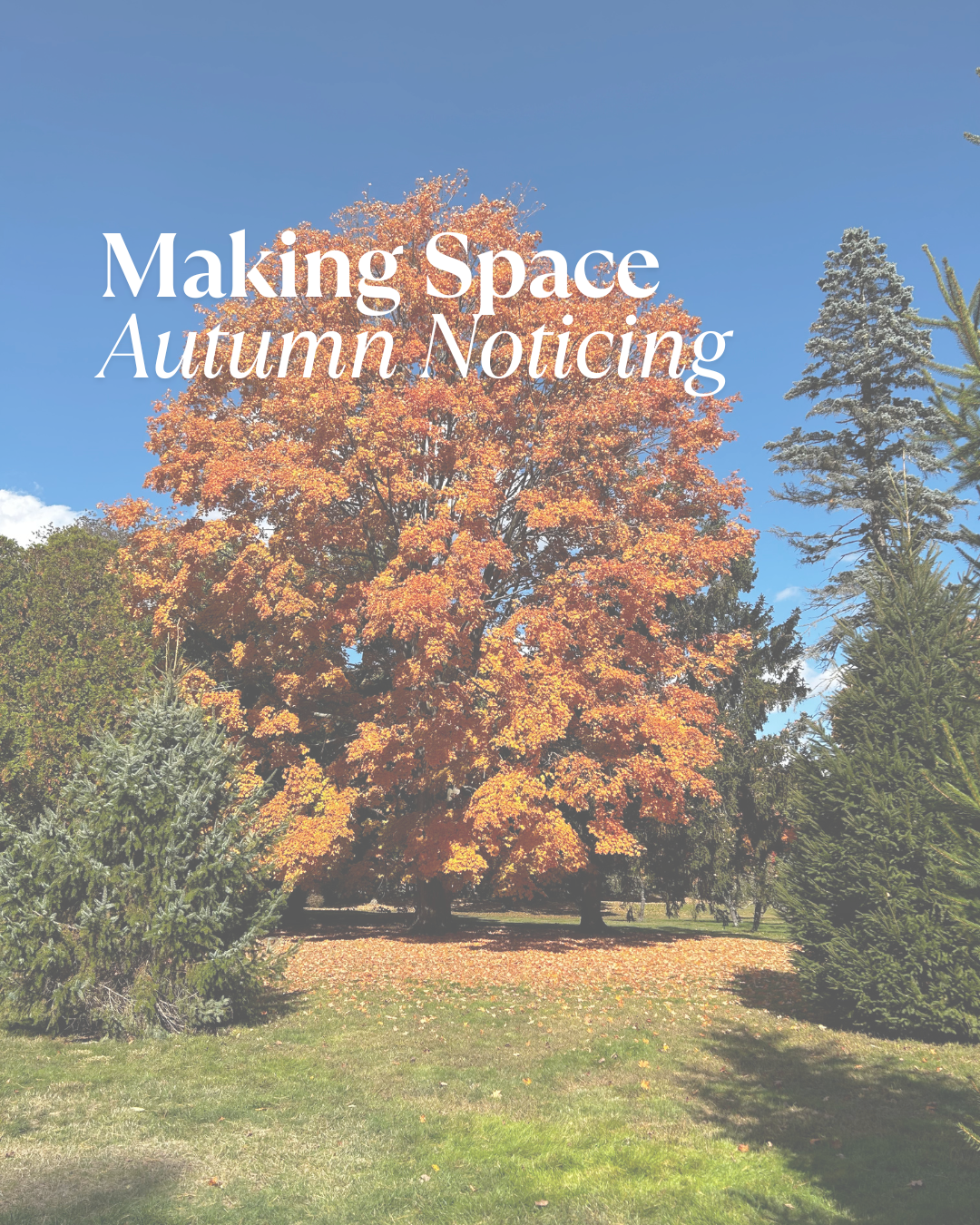
Our Making Space rhythm is about glorifying God with our time. It’s a practice of slowing down, clearing room in our days, and choosing presence over hurry. When we make space, we’re saying with our actions that God’s world and God’s presence are worth our attention, and more important than anything else.
For me, sometimes that just means taking time to notice. Efforts to be present in my everyday life, to eliminate distraction, to pay attention… these are small but meaningful ways to honor God with the moments He’s given me.
As a Christian, I believe this is part of my calling: to lift up my head and see life for what it truly is. When I look through the lenses of beauty, freedom, and abundance, I start to recognize God’s hand everywhere. Noticing becomes not just an art form, but a spiritual discipline, a way to worship. (And really, I think creating any kind of art can be a form of worship too.)
This fall, I want to make space to notice:
the colors of the trees
the sound of leaves underfoot
the smell and taste of fall spices
the feel of soft blankets and cozy layers
Maybe that’s why I love this season so much, it’s hard not to notice.
Will you join me in making space to notice this season?
Let’s glorify God with our time by slowing down, paying attention, and living fully in the present.
What will you choose to notice as the days turn golden and cool?
Known, Seen, and Loved: An Examen
As I was thinking about the call to see, know, and love the children in the church, I realized these are calls and desires in everyone’s life, so I thought we could use a little examen that helps us see that we are seen, known, and loved, as well as see the call to see, know, and love others.

1. Presence
Take a deep breath. Ask God to help you see yourself and others with His eyes—eyes of love.
2. Gratitude
When today did I feel truly seen, known, and understood?
Who reflected God’s love to me today in a way that felt unconditional?
3. Reflection
When did I make space for someone else to feel seen and heard?
How did I show love to someone without expecting anything in return?
Did I miss an opportunity to notice or care for someone who needed it?
4. Stretching Love
How have I responded to people who are difficult for me to love?
What is one small way I can practice loving even my enemies, as Christ calls me to?
5. Invitation
Where do I sense God inviting me to grow in seeing, knowing, and loving tomorrow?
What grace do I want to ask for as I end this day?
sacred story time (write a poem)
Last time, Pooh began his plan to get the honey from the bees, but there was a problem. This week, Christopher Robin steps in to help!
As we read this week’s passage, I hope you’ll take some time to wonder about the friendships in your life, how they bring joy and laughter, how they can disappoint. Come play, pray, and wonder with me.

"Oh, there you are!" called down Winnie-the-Pooh, as soon as Christopher Robin got back to the tree. "I was beginning to get anxious. I have discovered that the bees are now definitely Suspicious."
"Shall I put my umbrella up?" Christopher Robin said.
"Yes, but wait a moment. We must be practical. The important bee to deceive is the Queen Bee. Can you see which is the Queen Bee from down there?"
"No."
"A pity. Well, now, if you walk up and down with your umbrella, saying, 'Tut-tut, it looks like rain,' I shall do what I can by singing a little Cloud Song, such as a cloud might sing.... Go!"
So, while Christopher Robin walked up and down and wondered if it would rain, Winnie-the-Pooh sang this song:
How sweet to be a Cloud
Floating in the Blue!
Every little cloud
Always sings aloud.
"How sweet to be a Cloud
Floating in the Blue!"
It makes him very proud
To be a little cloud.
The bees were still buzzing as suspiciously as ever. Some of them, indeed, left their nests and flew all round the cloud as it began the second verse of this song, and one bee sat down on the nose of the cloud for a moment, and then got up again.
Noticing Prompt
Have you ever been disappointed by someone? How did it feel? How were you able to move on? Did the relationship continue? What would it look like to offer forgiveness?
Play Prompt
Make a list of words that rhyme with “bee” and then try to make a silly poem out of them. Maybe even include some made up words! If you do, what do you think those words mean? Why are words so important? How do they make you laugh or cry?
If you are with children, try saying the silly poem while you march in a circle or outside. How do you feel while doing this? How do the kids feel? What emotion are they expressing?
Imagination Prompt
If a friend asked you to do something silly that would embarrass you, would you do it? What factors would influence your decision? How would you feel about it when you make up your mind?
Prayer
Triune God, thank you for creating us for community. Bless our friendships and give us wisdom when they are hard. Help us to respect others as image-bearers, as well as ourselves. Show us what healthy and good community looks like.
Download a PDF of this content for a Winnie-the-Pooh coloring page!
Seen, Known, and Loved: The Calling of Children’s Ministry is Every Adult’s Calling

Whenever I think about children’s ministry, I return again and again to three simple words: seen, known, and loved.
Those three words sum up my deepest hopes for the kids in our church. I want every child to feel truly seen, genuinely known, and deeply loved by the church.
I say the church very intentionally. Of course, I mean Jesus, but the church is the body of Christ. When children feel seen, known, and loved by the church, they are experiencing the love of Jesus in real, tangible ways. And this language matters, because it’s not only about how children feel, it’s a calling for the adults of the church. We are invited (and entrusted) to be the ones who see, know, and love the children in our midst.
Think about what that means. To see a child is to notice them, not just as part of a group, but as an individual with their own gifts, needs, and personality. To know a child is to listen, to remember, to value their voice. And to love a child is to offer warmth, care, patience, and delight in who they are.
When we as adults do this faithfully in a safe environment, we create a foundation of belonging and rest. That foundation matters deeply, because as children grow, they will begin to wrestle with questions of faith. And questioning is not something to fear; it’s healthy, good, and necessary. If children have been rooted in an early experience of being seen, known, and loved, they will feel safe to ask those questions. They will know the church is a place that can hold their doubts and their wonderings, not just their certainties.
This is why “seen, known, and loved” is not just my goal for children’s ministry, it’s a vision for the whole church. Every program, every story, every interaction, every small gesture of care is an opportunity for the body of Christ to live out this calling.
Because when children grow up feeling seen, known, and loved by the church, they are also growing up feeling seen, known, and loved by Jesus. And that is a gift they will carry with them for the rest of their lives.
Ugly Art, Again! From Striving to Receiving
Let’s talk about ugly art again and why it can be an important spiritual practice. By “ugly art,” I mean creating without pressure, control, or concern for polish, art that may never be impressive but is honest, messy, and real.
As Christians, loosening our grip on control and perfection isn’t just emotionally healthy, it’s spiritually essential. Why? Because the Christian life is rooted in grace, not achievement. The gospel tells us we are loved, chosen, and redeemed not because we’ve earned it, but because God is good and merciful. Yet so often, we fall back into striving, trying to prove our worth, manage outcomes, or “get it right” for God.
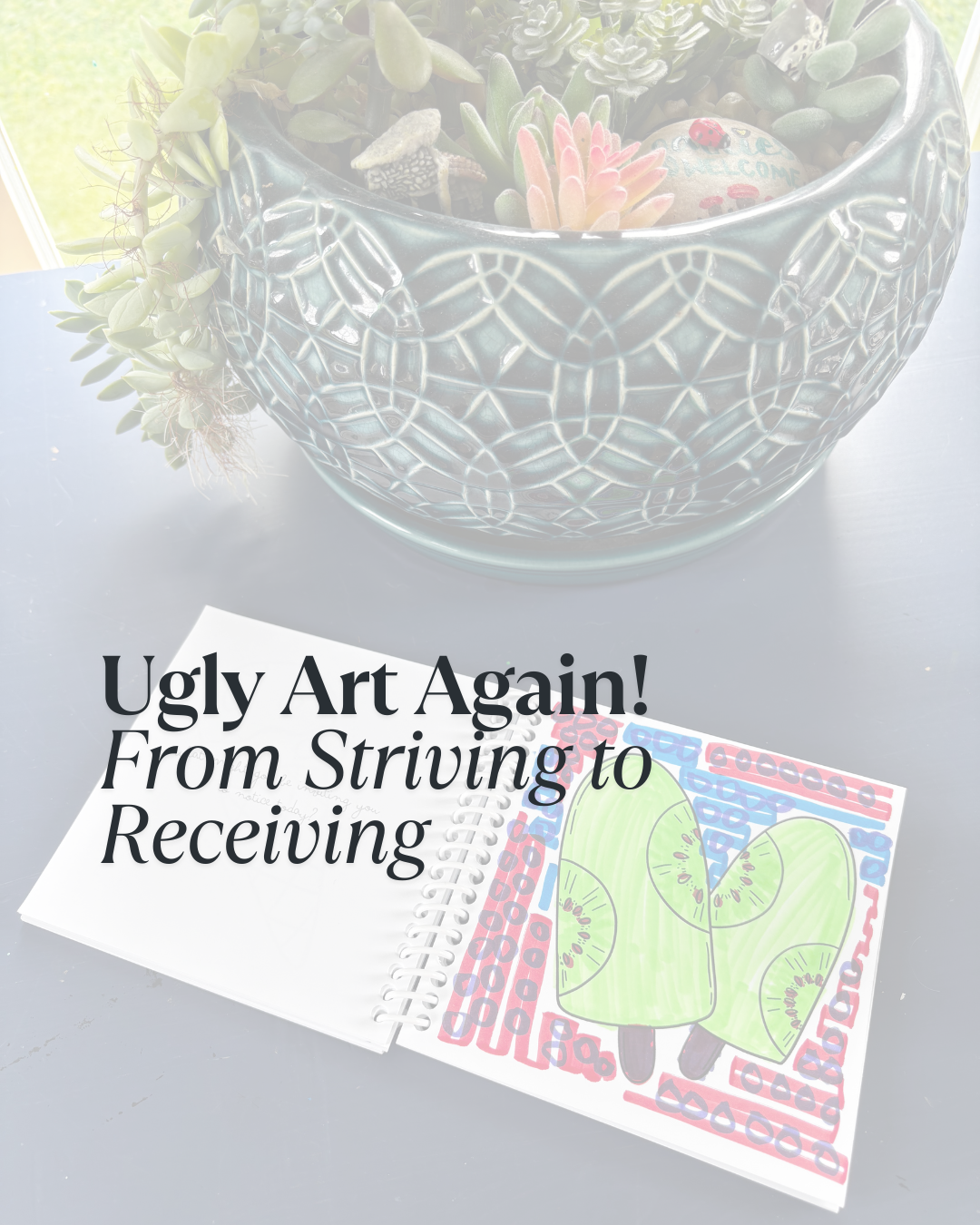
This is my coloring book and a page I colored. The question on the opposite page feels appropriate: What is God inviting you to notice today?
Control and perfection give us the illusion of safety, but they often keep us from intimacy with God. When we grip too tightly, we block ourselves from receiving. And the life of faith is meant to be received, not controlled.
Jesus invites us to come to Him like children: open-handed, dependent, delighted. He doesn’t say, “Come when you have it all together.” He says, “Come to me, all who are weary and burdened.” The spiritual life is not a ladder to climb but a gift to receive. It is not about mastering holiness, but abiding in Love.
When we shift from striving to receiving, we begin to live from a place of trust. We start to believe that God is not measuring our performance but longing for our presence. We stop managing our relationship with God and start enjoying it. And that’s where intimacy grows, not in perfection, but in presence.
This is why practicing ugly art matters. It trains us to let go, to resist the need to perfect or prove, and to simply be with God. In Scripture, God consistently shows up in quiet, ordinary places, in the whisper, not the whirlwind (1 Kings 19), in the stillness of the garden, in Jesus simply being with people.
When we slow down enough to be present, we create space to actually receive God’s love, rather than trying to earn it or perform for it. And being present reminds us: we are not just workers in God’s Kingdom, we are His beloved.
If making “ugly art” feels uncomfortable, you don’t have to do it alone. In spiritual direction, I love using art practices as a way to let go of expectations and discover God’s presence in simple, freeing, and even playful ways.
Responding to God’s Beauty: Create + Play
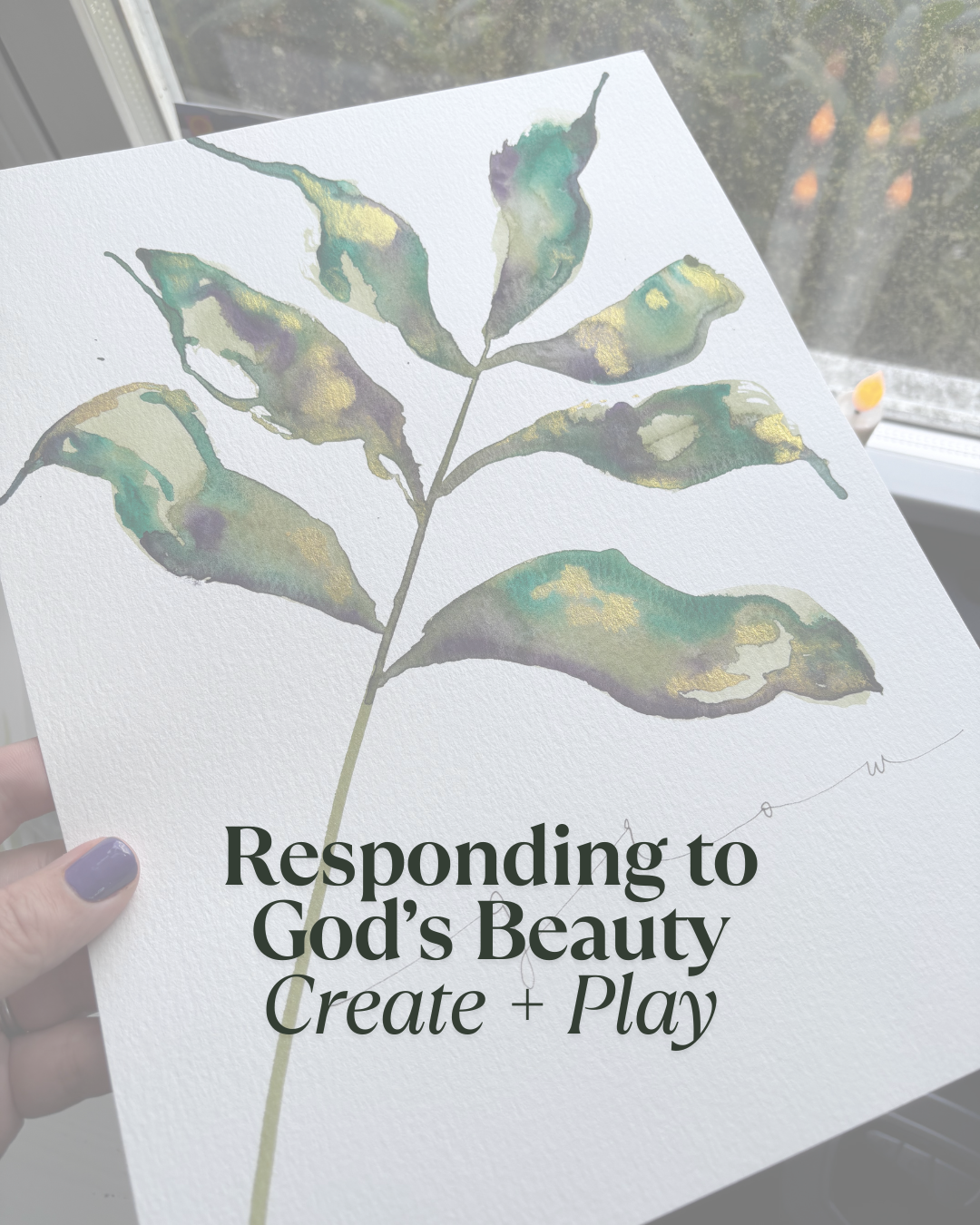
It’s time to move from making space into create and play. This is the rhythm we follow here. First, we pause, making space to sit with God, to reflect, to pray, to simply be in His presence. Then, from that stillness, we step into creating and playing.
So often, people think “create” must mean something artistic: painting, coloring, crafting. But creating is so much more than that! I like to think of it as a response, letting ourselves be moved by God’s beauty and then answering with action. It could be snapping a picture, chopping vegetables, lifting your voice in song, journaling, or dancing.
Sometimes this kind of creating flows naturally. Other times, we need to be intentional, and that’s where play comes in. Play loosens us, opens us, helps us practice noticing beauty. That’s why I share photo prompts, creative prompts, and prayer prompts—little invitations that are both playful and reflective.
Sometimes we are stirred by God’s beauty to create. Other times, we create as a way to train our eyes to notice His beauty more clearly.
So how do you want to play this week?
Making Space: Wordless Prayer
I’ve been taking a little longer with making space this month. September has felt like the right time to pause hereand notice what needs to be cleared away and what needs to be held close. Maybe it’s just me, but there’s something about the changing season that makes me want to breathe deeper and make room for God in new ways.
So here’s a simple practice to try:
Sit quietly for a minute with your hands open in front of you, palms up.
In one hand, imagine placing everything hard, sad, or scary that you’re carrying. Picture loading that hand up with anything heavy on your heart.
In the other hand, imagine holding everything you love—anything beautiful, fun, silly, or sacred that brings joy.
Then slowly lift your hands up, offering them to God.
You don’t even need words. The gesture itself becomes a prayer, an embodied way of saying: “I can’t hold all of this on my own. Please carry it for me.” and “Thank You for all this beauty and for being a God who gives good gifts.”
Sometimes, making space means letting go of so many words and simply being with God in a quieter way.
Try It with Kids
This hand-prayer works beautifully with children, too. You can guide them like this:
Hold out both hands in front of you, palms up.
In one hand, pretend to put anything that makes you feel sad, worried, or scared. You can “drop” it in your hand like a stone.
In the other hand, pretend to put things you love: something beautiful, fun, or silly that makes you happy. You can “pick up” these good things and place them in your hand like treasures.
After a moment, lift up both hands together. Tell God, “Here are the hard things. Please hold them for me. Here are the good things. Thank You for giving them to me.”
If children don’t want to use words, that’s okay. The simple action of lifting their hands is a prayer all by itself.
Learning to See Through God’s Eyes
Several years ago, I chose three words to shape the way I wanted to see the world: beauty, freedom, and abundance. They’re still words I come back to often. I don’t always live them out perfectly, but they continue to be a guide for me, a way of framing how I want to look at my life, my relationships, and the world around me.
The truth is, I don’t always see through that frame naturally. Most days I need the reminder to slow down, make space, and ask God to help me see differently. Left to myself, I get distracted, or I focus on what feels heavy or frustrating. But when I pause and pray, even a simple, quiet “Lord, help me see what You see”, it opens my eyes to what’s already there.
Scripture reminds us that God is the source of all three:
“One thing I ask from the Lord… to gaze on the beauty of the Lord and to seek him in his temple.” (Psalm 27:4)
“It is for freedom that Christ has set us free.” (Galatians 5:1)
“I came that they may have life and have it abundantly.” (John 10:10)
Making space for this kind of noticing doesn’t have to be complicated. It can be as simple as:
Looking out the window for a few minutes and asking, Where is the beauty here?
Taking a walk and asking, What freedom is God inviting me into today?
Sitting at the table and asking, What abundance am I overlooking today?
A Making Space Practice
This week, take five minutes each day to pause and ask God to show you beauty, freedom, and abundance in an ordinary place. Write down what you notice, or share it with someone else. Over time, these small moments of noticing can gently shift the way we see our lives and help us point others toward the goodness of God at work all around us.
An examen for the end of summer

The examen is a simple way of prayerful reflection—remembering, noticing, and receiving God’s grace in the ordinary. As summer comes to a close, take time to pause and look back over these months with God.
Remember
What moments from this summer stand out most vividly to me?
Where did I feel most alive, most myself?
Where did I feel God’s nearness?
Give Thanks
What gifts did summer hold for me, big or small?
Who am I especially grateful for this season?
How did play, rest, or joy find me?
Notice
Where did I feel weary, restless, or distracted?
Where did I sense God’s absence—or my own distance from God?
What have these moments taught me about myself?
Look Forward
What do I want to carry with me from summer into fall?
What might God be inviting me to let go of?
What blessing, prayer, or grace do I need for this next season?
Close
Rest for a moment in God’s love. Imagine God’s blessing resting on you as you step forward into what comes next.