
Archive
Creative Prompt: An Umbrella
I wonder what helps you feel sheltered?
An umbrella doesn't stop the rain from falling. It doesn't change the weather or make the storm disappear. But it does give us a little place of shelter right in the middle of it. I think that's a helpful picture of what life with Jesus can be like.
Following Jesus doesn't mean we won't experience hard things. We still have worries, disappointments, difficult relationships, and seasons when life feels overwhelming. But Scripture reminds us again and again that God is our refuge. He is present with us, caring for us even when our circumstances don't change.
Today we're going to draw a simple umbrella and spend some time wondering about what it means to find shelter in Jesus.
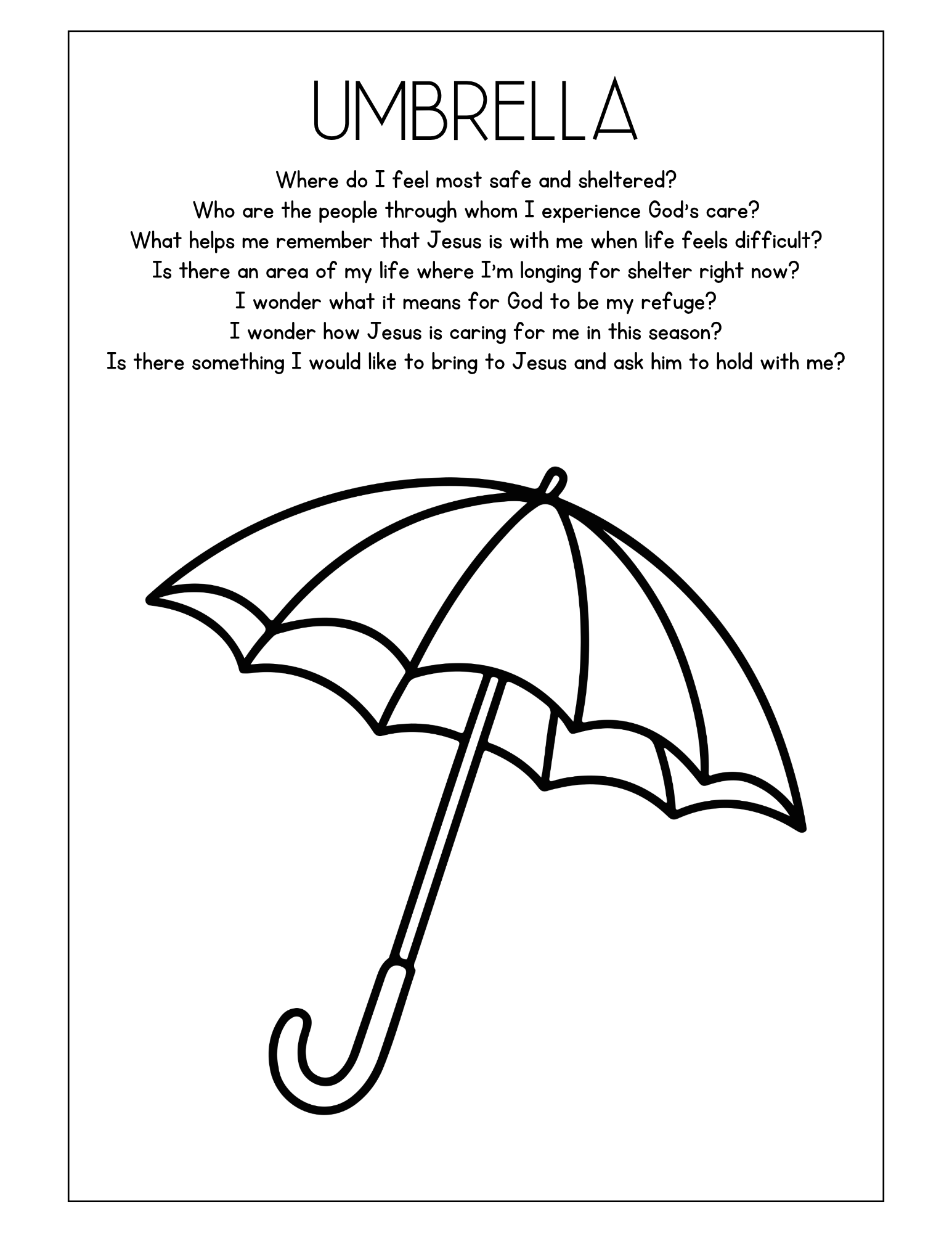
Draw or paint a simple umbrella, or use this coloring page.
As you draw, hold this wondering:
What helps me feel sheltered?
Wondering with Jesus
As you work, you might wonder:
Where do I feel most safe and sheltered?
Who are the people through whom I experience God's care?
What helps me remember that Jesus is with me when life feels difficult?
Is there an area of my life where I'm longing for shelter right now?
I wonder what it means for God to be my refuge?
I wonder how Jesus is caring for me in this season?
Is there something I would like to bring to Jesus and ask him to hold with me?
You don't need to answer every question. Notice if one catches your attention and stay with it for a little while.
A Kid-Friendly Version
Invite kids to draw and decorate an umbrella.
They can make it as colorful or silly as they'd like. Maybe it's a rainbow umbrella, an umbrella covered in stars, or one big enough to shelter an elephant!
As they color, you might wonder together:
What does an umbrella do?
Where do you like to go when you want to feel safe?
Who helps you feel loved and cared for?
What do you like to do when you're feeling worried or afraid?
I wonder how Jesus takes care of us when things are hard?
You could also read Psalm 46:1 together: "God is our refuge and strength, an ever-present help in trouble."
Finding Shelter in Jesus
Throughout Scripture, God is described as our refuge, our hiding place, and our shelter. Psalm 91:4 gives us a beautiful picture of God's care:
"He will cover you with his feathers, and under his wings you will find refuge."
I love that image of being gathered close. Sometimes we think that trusting Jesus means we should feel peaceful all the time. But finding refuge in God doesn't mean we never feel afraid or overwhelmed. It means we have somewhere to bring those feelings. We can come to Jesus with our worries, our questions, our disappointments, and our needs. We don't have to pretend the rain isn't falling.
And sometimes God's care reaches us through very ordinary things: a friend who checks in, a quiet place to rest, someone who prays with us, or a moment when we remember that we aren't alone. Part of practicing God's presence is learning to notice those places of shelter and receive them as gifts.
A Closing Invitation
When your umbrella is finished, take a moment to look at it. As you sit quietly with Jesus, you might ask:
Jesus, where are you offering me shelter and care right now?
And perhaps:
What would it look like to receive your care instead of trying to manage everything on my own?
Stay with Jesus for a little while, noticing whatever comes.
If you feel comfortable, I’d love to see what you create. When I share these prompts, I’ll always try to share what I’ve made too. Tag me on Instagram or comment below with a photo or reflection.
Creative prompt: A row of trees
I wonder where you feel rooted?
For this creative practice, we're going to paint a simple row of trees and spend some time wondering about our own roots, especially the people, places, practices, and truths that help us stay rooted in Jesus.
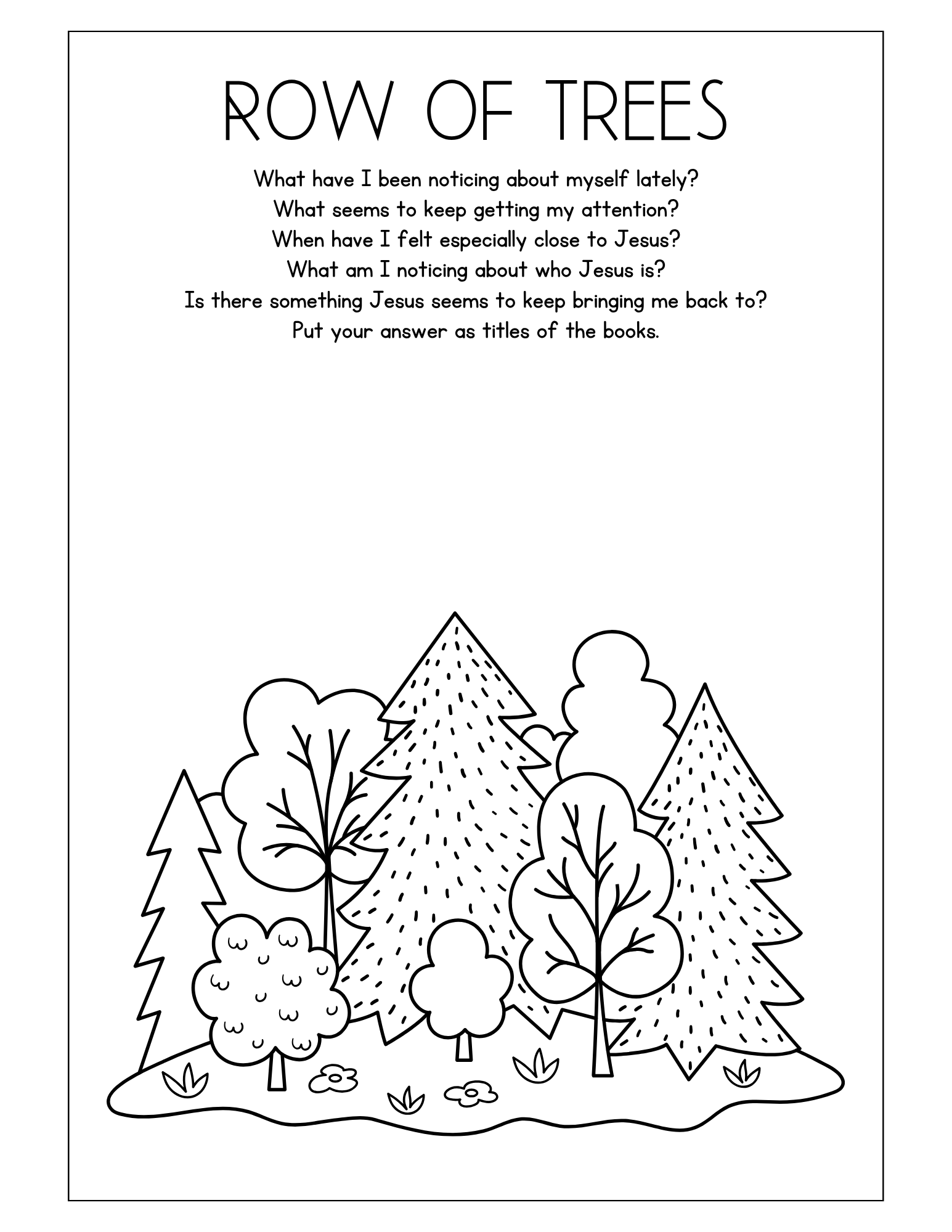
Paint or draw a row of trees, or color in this coloring page. Keep them simple. A trunk and a few branches are enough. Make each one different if you'd like. You can add roots beneath them, or leave the roots unseen.
As you work, hold this wondering: Where do I feel rooted?
You don't need to decide what your trees represent. Just paint and notice what comes to mind.
Wondering with Jesus
As you create, you might wonder:
Where do I feel most grounded and at home?
Who are the people who help me stay rooted?
What practices help me stay close to Jesus?
What truths about Jesus do I return to when life feels uncertain?
What has helped my roots grow deeper over time?
Is anything making me feel uprooted right now?
I wonder where Jesus is giving me what I need in this season?
I wonder what it means for my life to be rooted in his love?
You don't need to answer all of these.
Notice if one seems to catch your attention, and stay there for a while.
A Kid-Friendly Version
Invite kids to draw or paint a whole row of trees.
Make them as different as possible: tall trees, tiny trees, rainbow trees, fruit trees, trees with enormous leaves or trees with nests tucked into their branches.
Then draw some roots underneath.
You might wonder together:
What helps a tree grow strong?
What helps you feel strong and loved?
Who helps take care of you?
What helps you remember that Jesus loves you?
I wonder how Jesus helps us grow?
Let the conversation wander. Their answers don't need to fit neatly into the tree metaphor.
Rooted in Jesus
Being rooted in Jesus doesn't mean we always feel strong. Trees have seasons. They lose leaves. They grow new ones. They bend in storms. Sometimes very little seems to be happening above the ground at all. The roots remain.
Our life with Jesus can have seasons, too. There may be times when prayer feels easy and times when it doesn't. Times when we are growing in obvious ways and times when we can't see much happening. Our rootedness doesn't depend on constantly feeling close to God or getting our spiritual life exactly right.
We can keep returning to Jesus.
Jesus, what is helping me stay rooted in you right now?
And perhaps:
Where are you growing roots in me that I can't see yet?
You don't have to find an answer.
Just stay with Jesus for a little while and notice what comes.
Photo Prompt: Water
Photograph water.
What helps me feel restored?
Practicing the presence is partly about noticing what brings us back to ourselves and to an awareness of God with us. We can move through our days tired, distracted, or carrying more than we realize.
Water gives us a simple picture of being refreshed and renewed.
As you photograph water today, consider what restores you. Maybe it’s quiet, time outside, making something, being with someone you love, prayer, movement, or simply getting enough rest.
Notice what helps you feel more present and alive.
And perhaps receive that restoration as a gift from God, too.
Creative Prompt: Paint a stack of books

What am I learning or noticing as I live with Jesus right now?
We are always learning and noticing things as we move through our days. Sometimes we learn something about ourselves. Sometimes we notice an old pattern showing up again. We discover something that brings us joy, or something that makes us tired. We realize we're changing our mind about something. We become aware of a question we keep returning to.
And sometimes, when we pay attention to all of this with Jesus, we begin to notice something about him, too.
So for this creative practice, we're going to paint a simple stack of books and make some space to wonder:
What am I learning or noticing as I live with Jesus right now?
Draw or paint a stack of books or use this coloring page. As you work, think about your life with Jesus lately.
What have you been noticing?
Wondering Questions
As you create, you might wonder:
What have I been noticing about myself lately?
What seems to keep getting my attention?
What has been bringing me life?
What has felt difficult or uncomfortable?
When have I felt especially close to Jesus?
What am I noticing about who Jesus is?
Is there something Jesus seems to keep bringing me back to?
What am I curious about in my life with Jesus right now?
You don't need to answer all of these.
Notice if one seems to catch your attention. Stay with that one.
A Kid-Friendly Version
Invite kids to draw a stack of colorful books. They can decorate the covers, add funny titles, or make each book completely different.
As they work, you might wonder together:
What have you noticed lately?
What has made you really happy?
Has anything felt hard?
When do you feel close to Jesus?
What do you wonder about Jesus right now?
There's no particular answer you're trying to get from them. Let their wondering go wherever it goes.
A Closing Invitation
When your stack of books is finished, take a moment to look at it. Then sit quietly with Jesus and ask:
Jesus, what am I learning or noticing as I live with you right now?
Don't work too hard to find an answer, just notice what comes.
If you feel comfortable, I’d love to see what you create. When I share these prompts, I’ll always try to share what I’ve made too. Tag me on Instagram or comment below with a photo or reflection.
Photo Prompt: Photograph a mushroom
Today’s Practicing the Presence invitation: Photograph a mushroom.
Is there a season for mushrooms? I’m not sure, but they seem to be everywhere in my yard all of a sudden. Mushrooms appear almost overnight, especially after rain. You may not have noticed anything happening, and then suddenly, there they are.
As you take your photo, ask yourself:
What might be happening in my life that I can’t see yet?
Practicing the presence means paying attention to what God is doing right now, even when we don’t fully understand it or see the results yet. Sometimes we notice God’s work clearly. Other times, much of it seems to be happening beneath the surface.
A mushroom can be a small reminder that unseen doesn’t mean inactive.
Today, notice what appears. And consider where you might trust that God is at work even when you can’t see it yet.
Creative prompt: draw a bunch of stars

Draw or paint a page full of stars or color the ones on this coloring page.
They can be big or tiny, neat or wonky. You can make five-pointed stars, simple asterisks, little bursts of light, or whatever kind of star is easiest for you to make. As you work, hold this question:
I wonder what has felt bright lately?
Wondering with Jesus
As you draw, you might wonder:
What has felt bright lately?
What small good thing have I almost overlooked?
When have I felt especially alive or joyful?
Where have I noticed hope?
Where have I experienced God's goodness recently?
I wonder what Jesus might be inviting me to notice and enjoy?
You don't need to turn every good thing into a spiritual lesson. Sometimes noticing and enjoying a gift is enough.
A Kid-Friendly Version
Invite kids to fill a page with stars.
As they draw or color, ask them to think of things that have made them happy lately: playing with a friend, a favorite meal, something funny that happened, a pet, a good day at school, playing outside.
They can draw or write one thing inside each star.
You might wonder together:
What made you smile this week?
What was something really good?
What do you want to thank Jesus for?
I wonder what Jesus loved seeing you enjoy?
A Closing Invitation
When you're finished, look over your collection of stars. Notice all the different things that came to mind.
Then sit quietly with Jesus for a moment and ask:
Jesus, is there any light in my life that you want to help me notice?
Wait without trying too hard to find an answer. Maybe another small bright thing will come to mind. If it does, there's always room for one more star.
Creative Prompt: paint some houses

Paint a row of simple little houses or use this coloring page.
They don't need to be complicated: a square, a roof, a few windows and a door. Make them colorful and wonky. Add chimneys, flowers, trees, paths, curtains, or anything else you'd like.
As you paint, hold this wondering:
What does it mean for me to be at home with Jesus?
You don't need to come up with an answer. Let the question sit with you while you paint. Maybe you think about the places where you already feel close to Jesus or maybe you notice something you long for. Or maybe you just simply enjoy painting houses while remembering that you are already welcomed and loved by him.
As you work, you might wonder:
I wonder what helps me feel at home with Jesus?
I wonder when I feel most able to simply be with him?
I wonder what Jesus wants me to know about my place with him?
I wonder what makes it hard for me to believe that I belong?
I wonder what it would feel like to stop trying to earn my welcome with Jesus?
I wonder where Jesus is inviting me to rest in his love right now?
Don't try to answer them all. Notice if one question seems to stay with you.
You might even ask Jesus directly:
Jesus, what do you want me to know about being at home with you?
Then keep painting and listening.
A Kid-Friendly Version
Invite kids to draw a house they would really like to live in.
It can have whatever they want: a giant slide, a room for pets, rainbow windows, a swimming pool, a candy garden.
While they draw, you might wonder together:
What makes somewhere feel like home?
What makes you feel safe and loved?
I wonder what it is like to know that you always belong with Jesus?
I wonder what Jesus loves about having you close to him?
There doesn't need to be a lesson at the end. Give them room to wonder.
Making Our Home in Jesus
In John 15, Jesus tells his friends to abide in him, to remain with him, to make their home in his love.
I love that image because our life with Jesus isn't only about doing things for him. It is about being with him. We don't have to arrive at Jesus' door with everything figured out. We don't have to become more impressive or more spiritual before we're allowed inside. We are already wanted.
A Closing Invitation
When your houses are finished, look at them for a moment. Imagine one of those little houses as a picture of your life with Jesus. There is a light on. The door is open. You are expected and you belong there.
And sit for a moment with this wondering:
Jesus, what would it look like for me to make my home in your love today?
Creative prompt: Paint a Bowl of Impossible Fruit
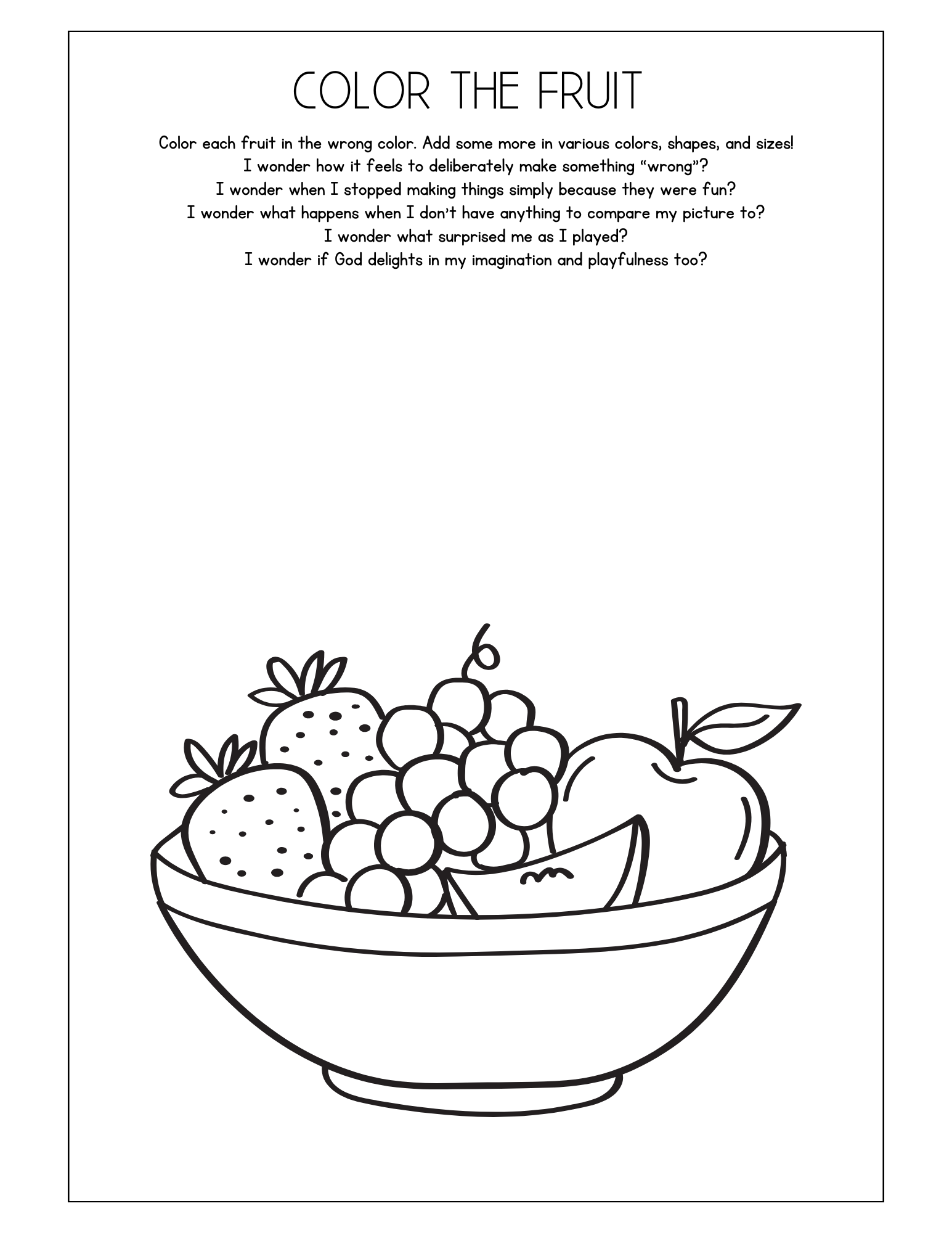
Begin by painting or drawing a simple bowl, then fill it with fruit, or use this coloring page. You can paint fruit you recognize, but use completely unexpected colors, a blue banana or a striped strawberry, or even invent fruit that doesn’t exist at all!
Try not to ask, Does this look right?
Ask instead: What would be fun?
Let yourself make something that couldn’t exist anywhere except on your page.
Wondering Questions
As you create, you might wonder:
I wonder how it feels to deliberately make something “wrong”?
I wonder when I stopped making things simply because they were fun?
I wonder what happens when I don't have anything to compare my picture to?
I wonder what surprised me as I played?
I wonder if God delights in my imagination and playfulness too?
You don't have to turn the practice into a lesson. You can simply notice what happens when you give yourself permission to play.
A Kid-Friendly Version
Kids may already be much better at this than grown-ups!
Draw a bowl and fill it with the strangest fruit you can imagine. Make up your own colors, shapes, and kinds of fruit. Then give your new fruits names. Maybe you've invented a Purple Fuzzberry or a Rainbow Crunch Melon.
You might wonder together:
What does your fruit taste like?
Where does it grow?
Which one would you most like to eat?
Can you invent a fruit that has never existed before?
Follow the silliness wherever it goes.
When you're finished, look at your bowl of impossible fruit. Notice which one makes you smile. Which one surprised you? Which one could only have come from you?
And then hold one final wondering:
I wonder what Jesus enjoys about the way I play and imagine?
You don't have to answer. Maybe today it's enough to enjoy the fruit.
If you feel comfortable, I’d love to see what you create. When I share these prompts, I’ll always try to share what I’ve made too. Tag me on Instagram or comment below with a photo or reflection.
photo prompt: something growing
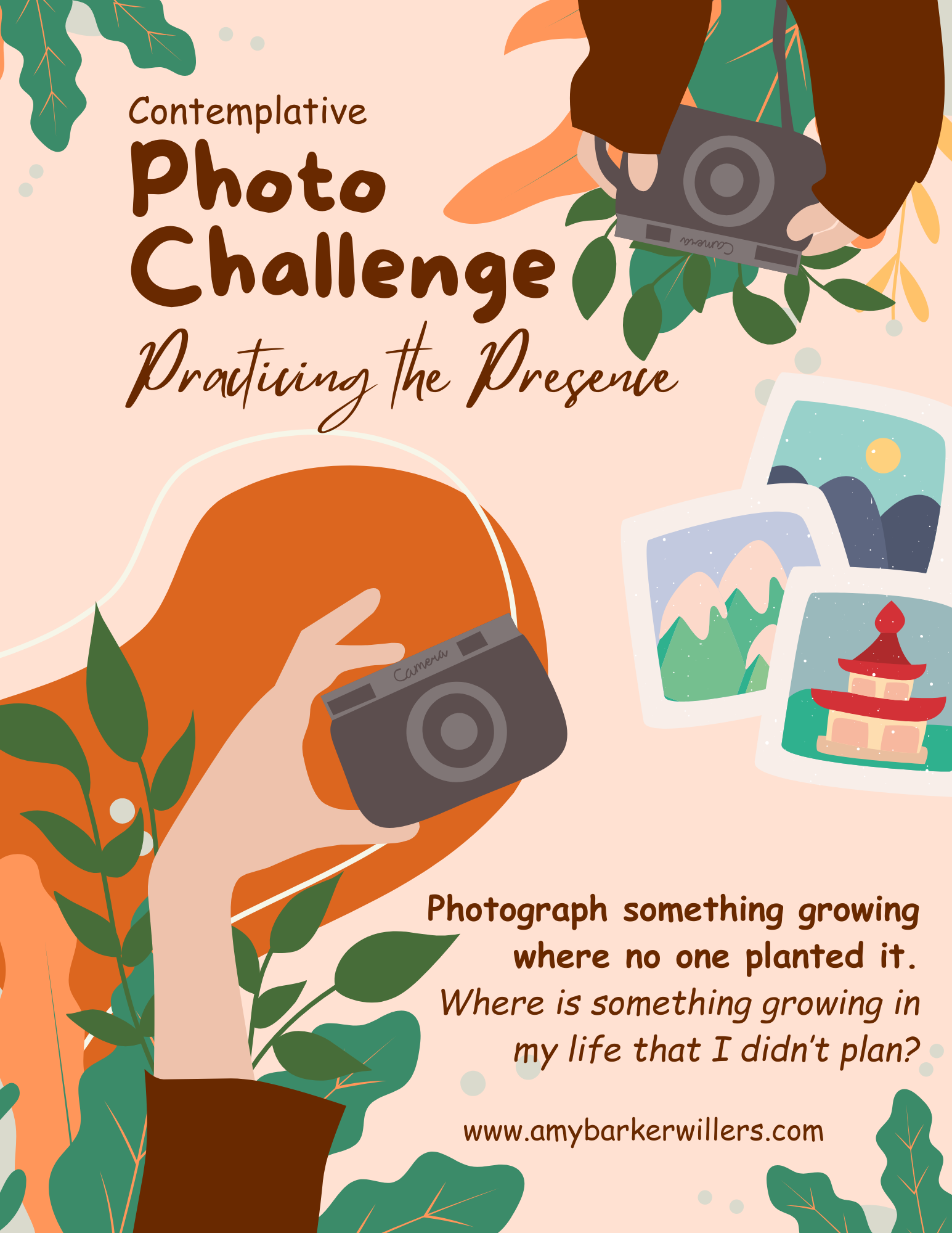
Today’s Practicing the Presence invitation:
Photograph something growing where no one planted it.
Then ask yourself:
Where is something growing in my life that I didn’t plan?
Practicing the presence is about noticing where God is already at work. We can spend a lot of time thinking about what we need to make happen, fix, or figure out. But not everything good in our lives is something we planted ourselves.
Sometimes growth just appears. Maybe something in you is changing. Maybe a new relationship is forming. Maybe you’re discovering an interest, a hope, or a little bit of courage you didn’t have before.
Today, look for something growing where no one planted it. Let it remind you to notice what might be quietly growing in you, too.
Where might God be at work without you having to make it happen?
Creative Prompt: Draw a path of stones
Where does the path go?
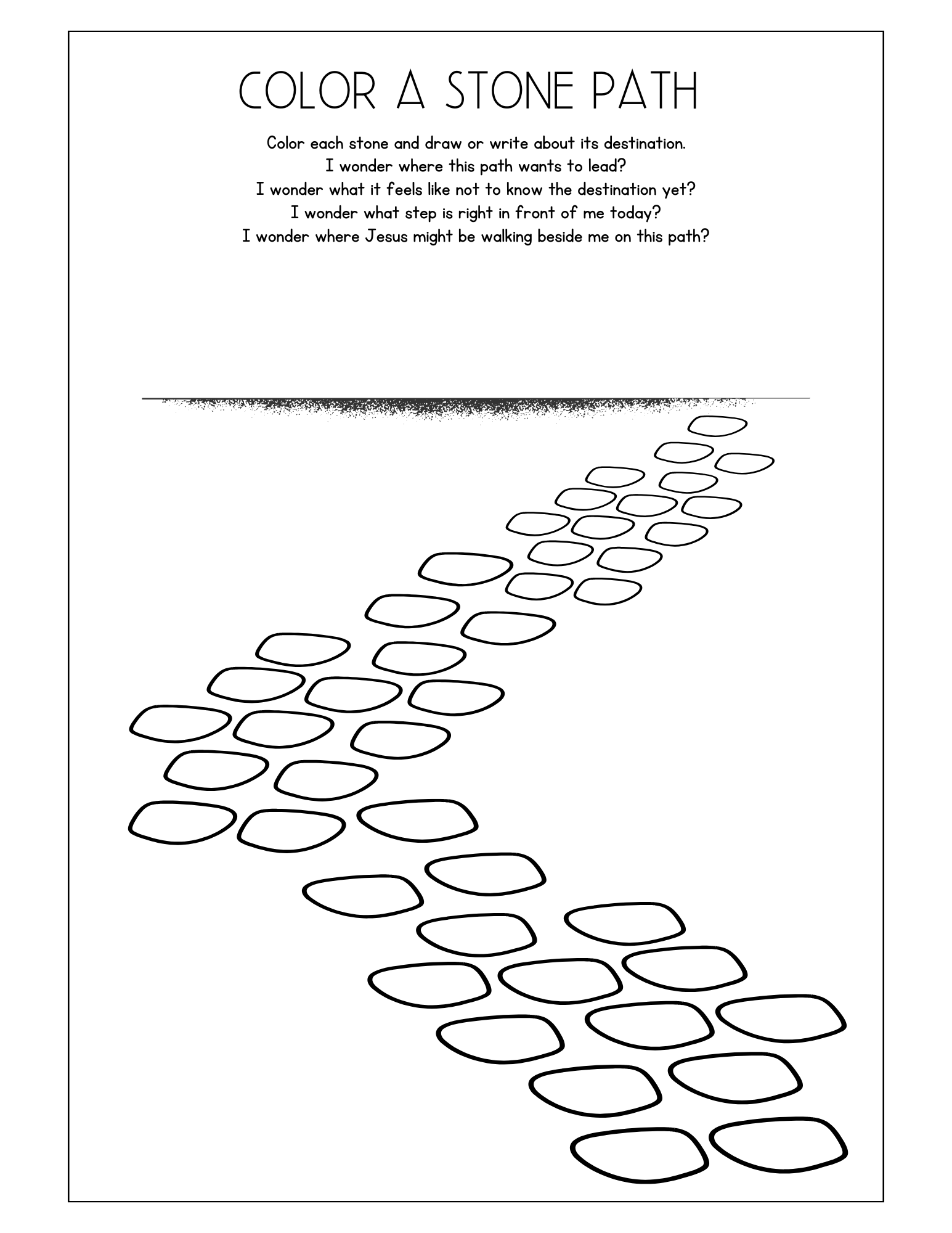
Most of us want to see the whole path before we begin but so much of life looks more like stepping stones than a paved road.
Draw, color, or paint a path of stepping stones (or use this coloring page) across your page and let the path travel somewhere. As you draw, hold this wondering:
Where does the path go?
Not necessarily where you think it should go, just notice what emerges.
After coloring, start adding details around the path. Does it have flowers? Grass between the stones? Are there trees along the way?
Wondering Questions
I wonder where this path wants to lead?
I wonder what it feels like not to know the destination yet?
I wonder what step is right in front of me today?
I wonder where Jesus might be walking beside me on this path?
A Kid-Friendly Version
Invite children to:
Draw a path of stepping stones.
Decide where it goes.
Maybe it leads to:
a castle
a treehouse
a dragon
a treasure chest
a giant ice cream cone
Wonder together:
Where does your path go?
What might you find along the way?
Who would you like to walk with you?
There are no wrong destinations.
When you finish your path, take a moment to look at it.
Notice: Does the destination matter most? Or do your eyes linger on the stones themselves?
What if Jesus isn't only waiting at the end of the path? What if He is present on every stone along the way?
If you feel comfortable, I’d love to see what you create. When I share these prompts, I’ll always try to share what I’ve made too. Tag me on Instagram or comment below with a photo or reflection.
Creative Prompt: Paint Balloons
Write tiny joyful moments inside each one.
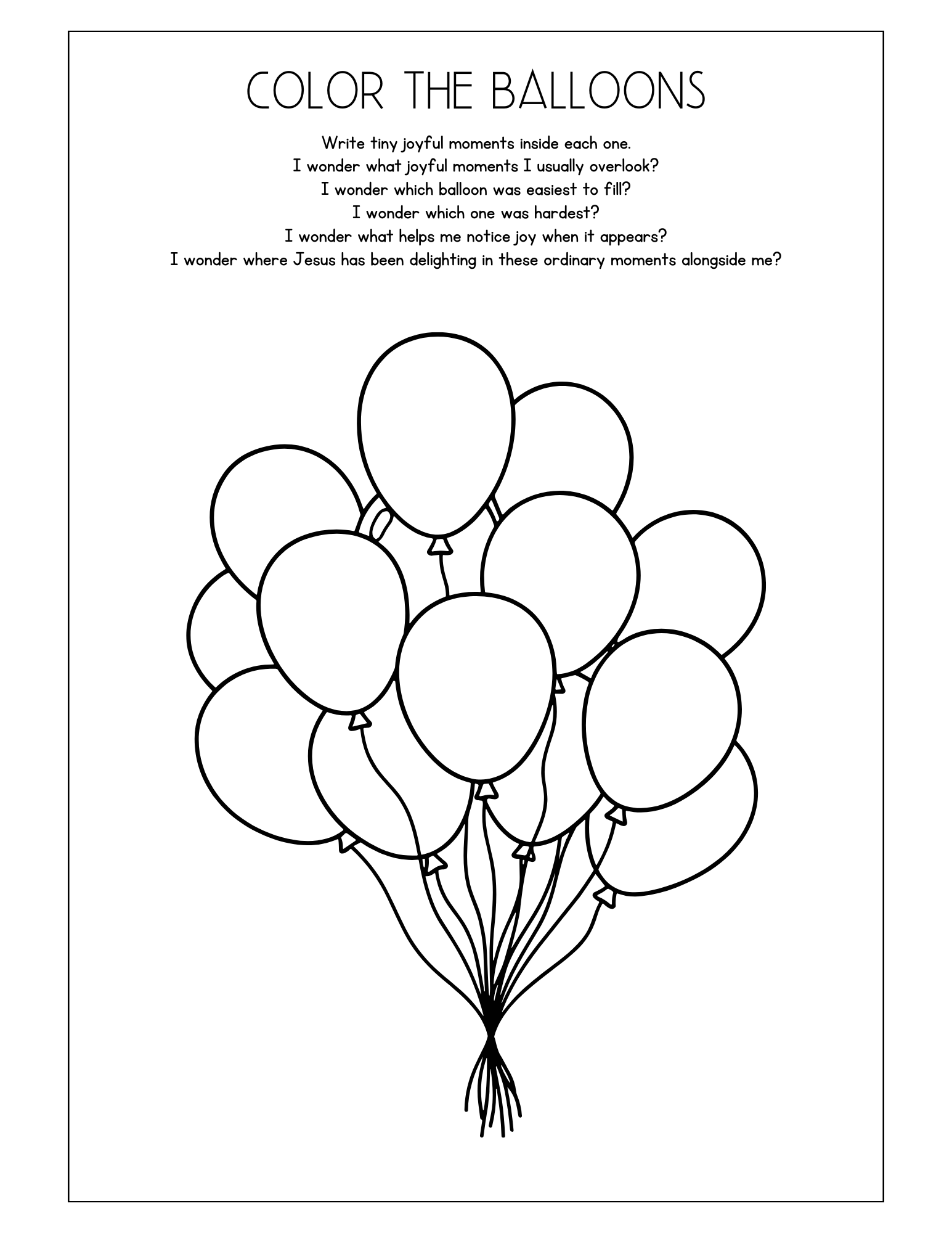
Today's creative practice is an invitation to notice them all the tiny moments of joy through an ordinary day.
Paint or color a page full of balloons or use this coloring page. As each balloon takes shape, write a tiny joyful moment inside it.
You might fill your balloons with things like:
hearing birds outside your window
fresh sheets
a good conversation
finding something you thought was lost
sunlight on the floor
finishing a project
a favorite song
a moment of quiet
Let each balloon become a small celebration.
Wondering Questions
I wonder what joyful moments I usually overlook?
I wonder which balloon was easiest to fill?
I wonder which one was hardest?
I wonder what helps me notice joy when it appears?
I wonder where Jesus has been delighting in these ordinary moments alongside me?
A Kid-Friendly Version
Invite children to paint or draw lots of balloons.
Inside each balloon, help them:
write something fun they did
draw something they love
add a favorite memory from the week
Wonder together:
What made you smile recently?
Which balloon would float the highest?
What is one small thing that made today better?
There's no wrong answer.
A Closing Invitation
When your balloons are finished, step back and look at the whole page, a collection of ordinary joys. As you look at your balloons, you might carry this wondering with you:
I wonder what joy Jesus is inviting me to notice today?
And perhaps that noticing is its own kind of celebration.
Practicing the Presence prompt: Photograph something bright
Photograph something bright.
Then ask yourself:
What brought you joy today?
Practicing the presence is about paying attention to God in ordinary life. Brother Lawrence wrote about finding God in everyday tasks, not through big spiritual experiences, but through simple awareness and attention.
Joy can help us do that. When you stop to photograph something bright, you’re practicing noticing instead of rushing past your life.
Not every day feels joyful, and this practice isn’t about pretending everything is fine. It’s simply an invitation to pay attention to small moments of goodness and presence. So today, look for something bright.
Pause for a moment. Take the photo. Notice the joy that was already there.
a wordless prayer to make space for joy
Sit quietly for a moment with your hands open in front of you, palms up.
In one hand, imagine placing everything heavy you’re carrying: worries, sadness, stress, fear, exhaustion, disappointment. Let that hand hold the weight of it all.
In the other hand, imagine gathering small pieces of joy: something beautiful, funny, comforting, peaceful, or good. A person you love. A memory that made you laugh. The color of the sky. A tiny reminder that life still holds beauty.
Then slowly lift both hands toward God.
You don’t need many words. The gesture itself becomes a prayer:
“Here are the hard things.”
“And here is the joy You are still giving me.”
Sometimes joy isn’t found by ignoring what hurts. Sometimes it grows when we bring both the sorrow and the beauty honestly before God.
And sometimes, making space for joy simply means noticing that even now, good gifts are still being placed into our hands.
This is mostly a repost from a post written last fall that includes a kid-friendly option for a wordless prayer activity.
Creative Prompt: Color a cake
Decorate it for an ordinary thing worth celebrating.
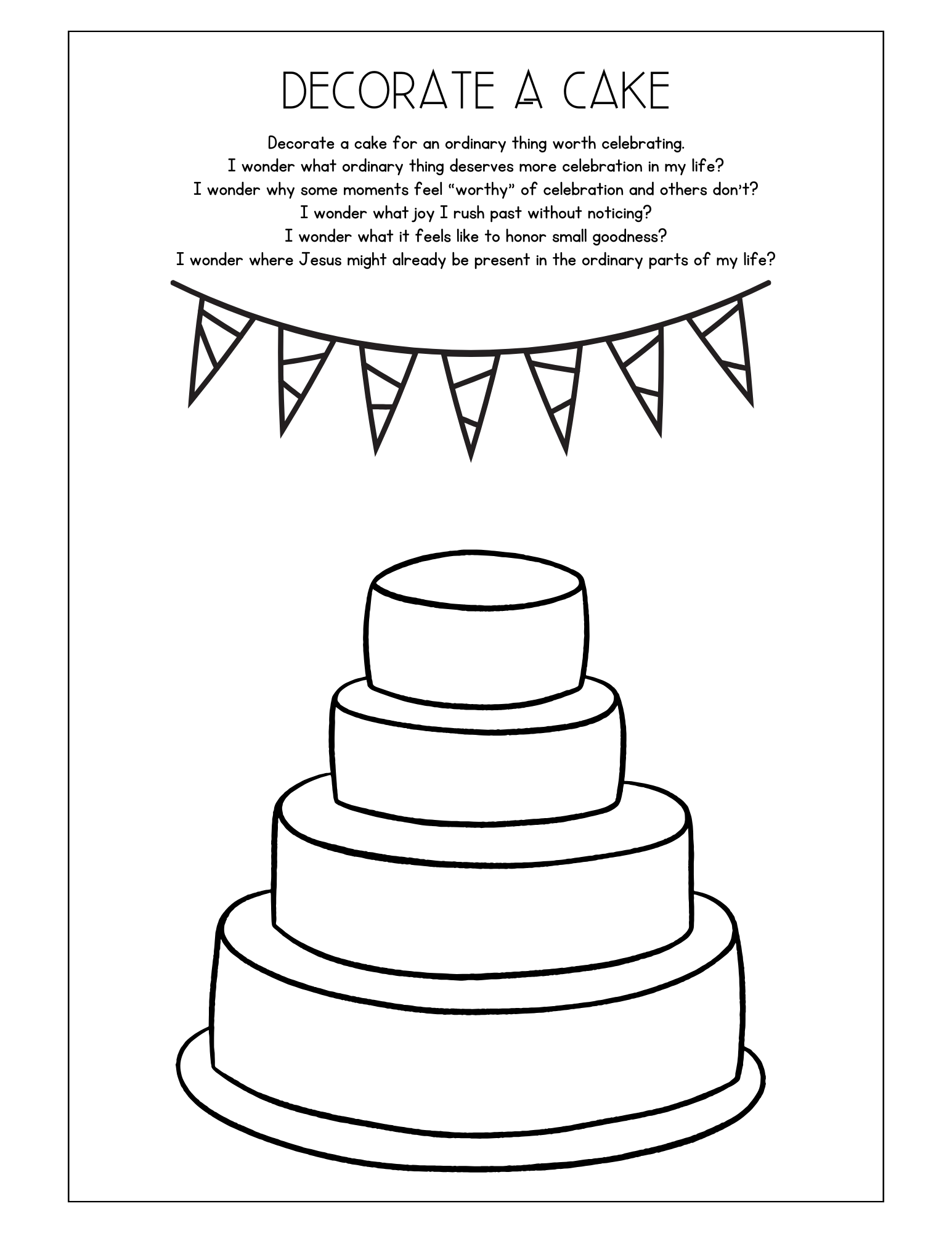
We usually save celebration for the big things, the moments that feel obvious and important. But so much of life is made up of quieter things, like getting through a hard week, making dinner (again!), or good conversation.
Today’s creative practice is an invitation to celebrate something small and ordinary, not because it’s flashy, but because it matters.
Draw a cake (or use this coloring page) then decorate it for an ordinary thing worth celebrating.
You can write the reason on the cake stand, on candles, or secretly somewhere in the picture, or simply hold it quietly in your heart while you create.
Let the celebration be gentle and sincere.
Watercolor Option
Lightly sketch your cake shape.
Paint the layers, frosting, candles, sprinkles, or decorations in any colors you’d like.
Add details slowly:
stripes
dots
tiny flowers
mismatched candles
absurd amounts of frosting
Colored Pencil or Crayon Option
Draw your cake with bold lines.
Decorate every section differently:
patterns
swirls
confetti
words
tiny symbols of the thing you’re celebrating
You can even make each layer represent a different ordinary joy.
Wondering Questions
I wonder what ordinary thing deserves more celebration in my life?
I wonder why some moments feel “worthy” of celebration and others don’t?
I wonder what joy I rush past without noticing?
I wonder what it feels like to honor small goodness?
I wonder where Jesus might already be present in the ordinary parts of my life?
Let the questions stay playful and open.
A Kid-Friendly Version
Invite kids to:
Draw the most fun cake they can imagine.
Decorate it for something small but happy:
finishing a book
playing outside
helping someone
learning something new
being brave
Wonder together:
What would this cake taste like?
Who would you share it with?
What small thing made you happy this week?
There are no wrong celebrations here.
When you’re finished, look at your cake for a moment. What did you choose to celebrate? How did it feel to make space for that?
You might carry this wondering with you: What if joy grows every time we notice something worth celebrating? And maybe today, even this small creative moment belongs at the party too.
If you feel comfortable, I’d love to see what you create. When I share these prompts, I’ll always try to share what I’ve made too. Tag me on Instagram or comment below with a photo or reflection.
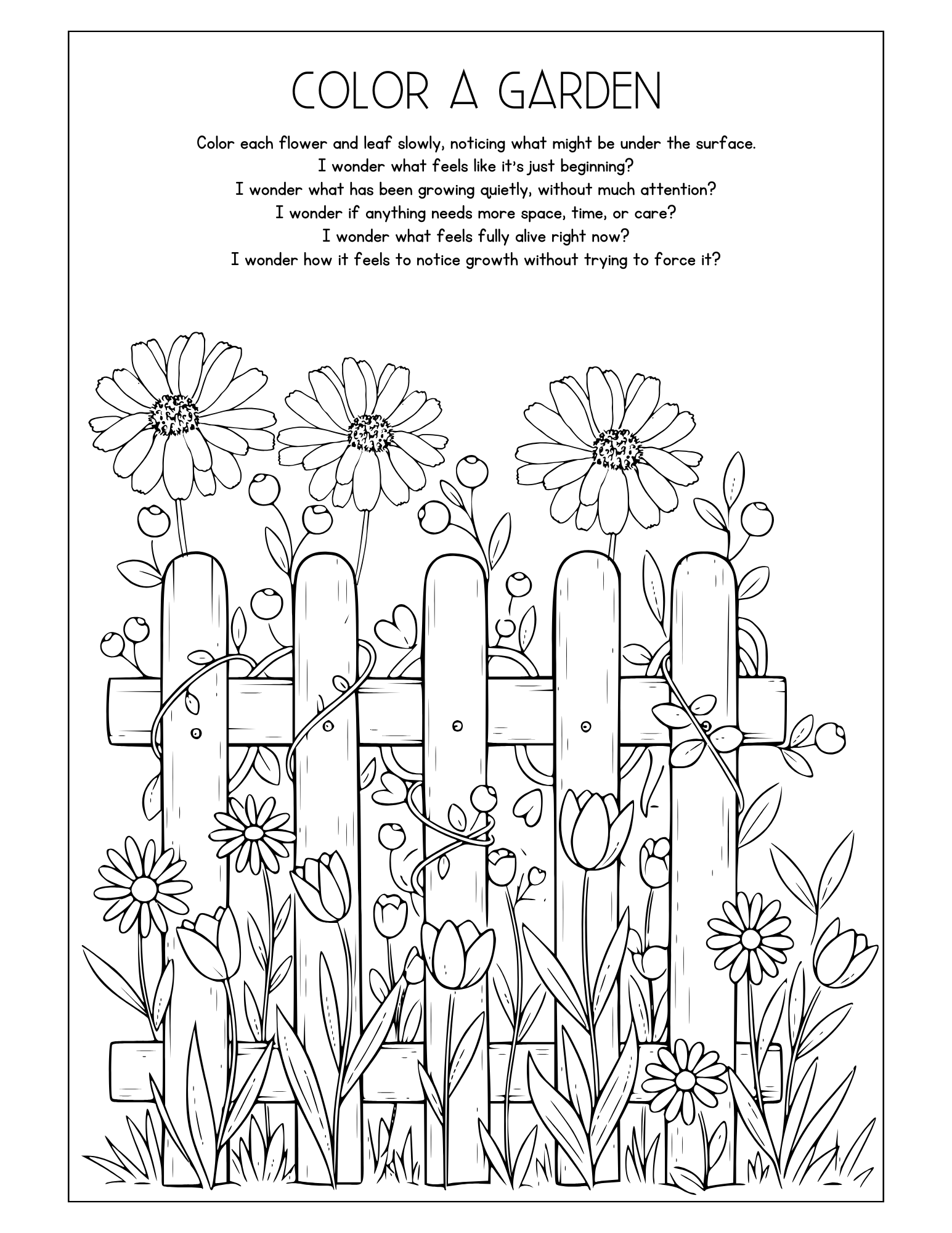
Creative Prompt: Color a Garden
I wonder what is growing in your life right now?
Growth doesn’t usually happen all at once.
It’s slow and quiet and often hidden. Sometimes we don’t even notice it until something small begins to bloom. Today’s practice is an invitation to notice what might be growing in your life, not by analyzing it, but by gently creating space to see it.
The prompt is simple: Color a garden (or color one in, using this coloring page). You know how to draw simple flowers and leaves and that’s all you need to do. There’s no need to make it realistic. As you work, hold this gentle wondering: What is growing in my life right now?
Watercolor Option
Lightly sketch your garden, or begin directly with paint.
Use soft washes and layered colors to build your garden slowly.
Let some areas stay light or unfinished, not everything needs to be in full bloom.
Allow colors to overlap and grow into one another.
Pause as you go. Notice what emerges.
Wondering Questions
I wonder what feels like it’s just beginning?
I wonder what has been growing quietly, without much attention?
I wonder if anything needs more space, time, or care?
I wonder what feels fully alive right now?
I wonder how it feels to notice growth without trying to force it?
Let the questions stay soft. You don’t need to figure anything out.
A Kid-Friendly Version
Invite kids to:
Draw or color a garden, any kind they like.
Fill it with plants, flowers, bugs, or anything they imagine growing.
You can wonder together:
What is growing in your garden?
Is anything still small or just starting?
What helps things grow?
Let their answers be simple and imaginative.
A Closing Invitation
When you’re finished, sit with your garden for a moment.
Notice:
What draws your eye?
What feels alive?
What feels like it’s still waiting?
You might carry this wondering with you:
I wonder where Jesus is present in the slow growth of my life?
Creative Lenten Practice, Session 4: Rejoicing Together
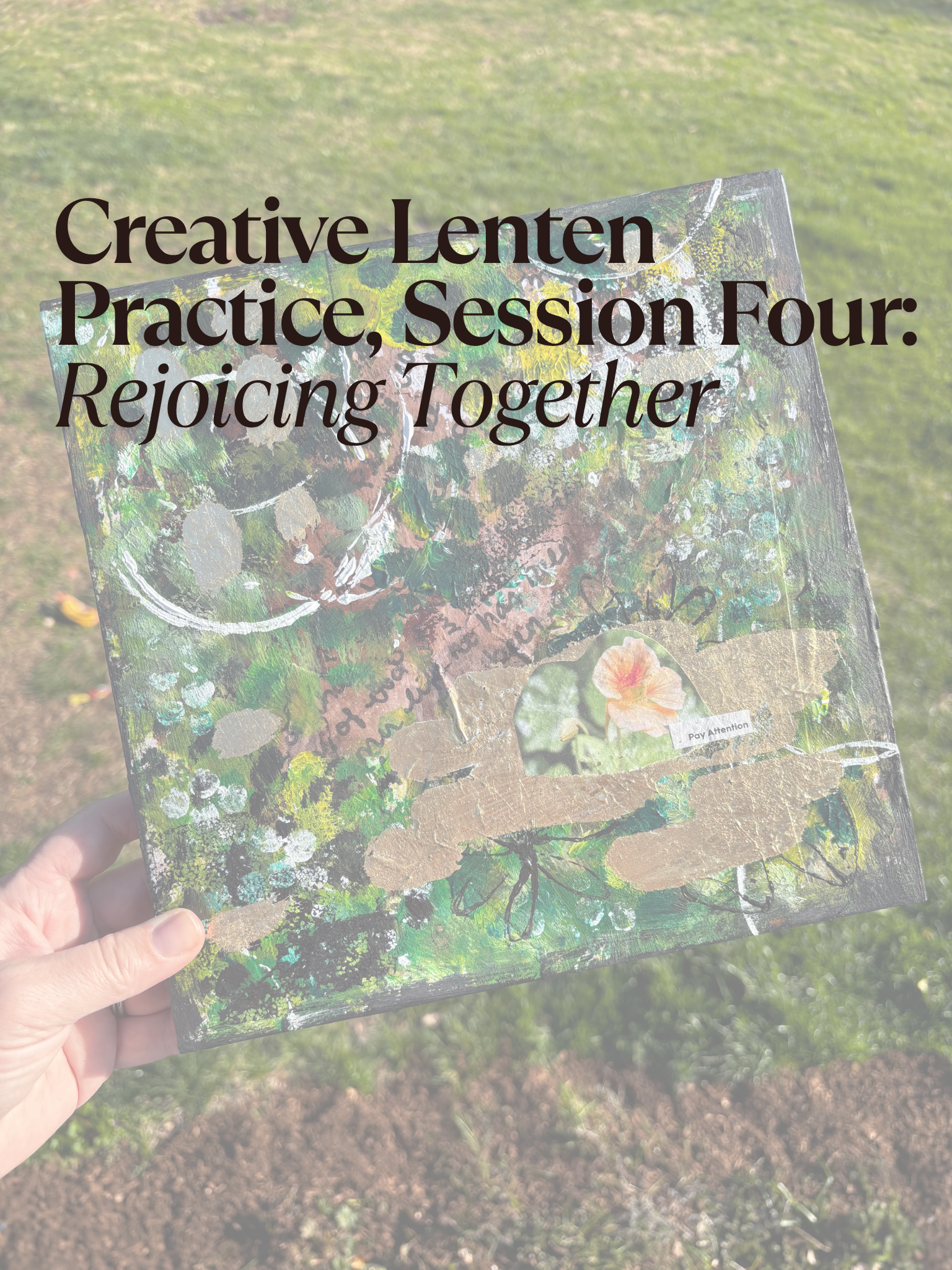
As we come together now during Eastertide, we turn toward joy. Not a forced or surface-level happiness, but a deeper kind of rejoicing, the kind that can hold everything that has come before it.
Supplies:
your previous project from session one OR watercolor paper
gold leaf, glue, and sealant (or gold acrylic marker)
paint brush
things to collage (old magazines work great for this one!)
Step 1: Prepare your body (5 minutes)
If you’re able, begin this practice with something simple and nourishing, a small snack, a warm drink, or even just a moment of settling in a comfortable space. This session carries a slightly different tone. There is still space for quiet, but also room for warmth, presence, and even gentle conversation if you are with others.
You might begin by reading these words from Jan Richardson slowly:
And the stone is rolled back
not so that we can see
where Jesus was,
but so that we can see
where he is not.
Not bound,
not contained,
not held
by death or despair.And so we are not bound,
not contained,
not held—
not by what we have been,
not by what we have done,
not by what has been done to us.The stone is rolled back
so that we might step
into the wide, unbounded
life of resurrection.
Sit with that for a moment.
Step 2: Reflect (5–10 minutes)
Read slowly:
Over these past weeks, you have been practicing letting go, releasing what feels heavy, trusting that you do not need to hold everything so tightly.
You have practiced rest, allowing space for grief, weariness, and all that feels unfinished. You have begun to notice new life, small, quiet signs of growth beneath the surface. Through it all, the invitation has not been to become someone new through effort, but to notice what God has already been doing within you.
Now we come to rejoicing.
Rejoicing does not mean everything is resolved or healed. It means we begin to recognize where life has been present all along. As the apostle Paul the Apostle writes, “Rejoice always… for the Lord is near.” Joy is not something we force or prove. It is something we begin to notice, because God is with us.
Step 3: Prepare Your Piece (10–15 minutes)
Bring back the piece you have been working on over the past sessions (or create a simple one if you’re starting here). Take a moment to look at it.
Notice:
the torn edges
the layered pieces
the places that feel unfinished
the places that feel alive
Step 4: Add Gold (15–20 minutes)
For this step, you’ll need:
gold leaf (or gold paper/paint as a substitute)
glue
a brush or your fingers
First, gently apply glue to parts of your piece. Let the glue sit until it becomes tacky or clear. Then carefully place the gold leaf over those areas. Gently press it down and brush away the excess.
As you do this, remember: you are not covering over what has been. You are honoring it.
Step 5: Words of Blessing (Optional, if with others)
If you are doing this practice with others, take a moment to offer and receive words and pictures from the old magazings.
Choose one person (for example, the person to your left) to quietly reflect on their presence and what you have witnessed in them. Peruse old magazines or other collage elements and offer a simple word or phrase as a blessing, something that names life, hope, or truth.
Then receive a word from someone else. Add those collage elements as the final layer of your piece.
If you are alone, you might instead ask:
What word might God be offering me?
Write that word and add it to your piece.
Step 6: Sit and Wonder (5–10 minutes)
Sit quietly with your finished piece.
You might reflect on:
How do I feel as I look at this now?
What was it like to add gold to these places?
What did it feel like to receive (or choose) a word of blessing?
What part of this process surprised me?
Let yourself notice without needing to explain.
Step 7: Closing Benediction
You might end with these words from John Chrysostom:
Let all partake of the feast of faith.
Let all receive the riches of goodness.Let no one mourn that they have fallen again and again,
for forgiveness has risen from the grave.Let no one fear death,
for the Savior’s death has set us free.Christ is risen, and life is set free.
Amen.
Practicing the Presence Prompt: Something tiny
“Photograph something tiny that’s growing.
Where is God in the small and slow-growing?”
Growth is easy to miss when it’s small: it could be a new leaf just starting to open, grass pushing up through the dirt, or a bud that hasn’t bloomed yet.
Nothing about it feels dramatic. There’s no big moment, no clear before-and-after. It’s quiet, gradual, and often hidden unless you’re paying attention.
Most of life feels this way.
We want change to be obvious and quick. We want to see progress, to know that something is happening. But so much of what matters grows slowly, over time, beneath the surface, without much to show for it at first.
What Is “Practicing the Presence”?
Practicing the presence means learning to notice God in these kinds of moments.
Not just in big breakthroughs or clear answers, but in the quiet work that unfolds little by little.
It’s trusting that God is present in growth we can’t always measure.
Try This
Today, look for something small that’s growing.
It might be outside, a plant, a tree, a patch of grass. Or it might be something closer like a houseplant, a garden, even something you’ve been tending over time.
Pause and really look.
If you’d like, take a photo, not because it’s impressive, but because it’s easy to overlook.
Then ask yourself:
Where do I see small growth in my life right now?
What feels slow or unfinished?
How might God be at work in ways I can’t yet see?
Growth doesn’t have to be fast to be real.
Sometimes the most important things are the ones that take time, quietly, steadily, day by day.
And God is there in all of it.
Creative Prompt: Color a square
Divide it into four parts and notice your day.
Our days can blur together. One moment leads into the next, and before we know it, the day is over, full, or maybe just busy, or maybe hard to name at all.
This practice invites you to slow down and look again, not at the whole day all at once, but in small, held pieces.
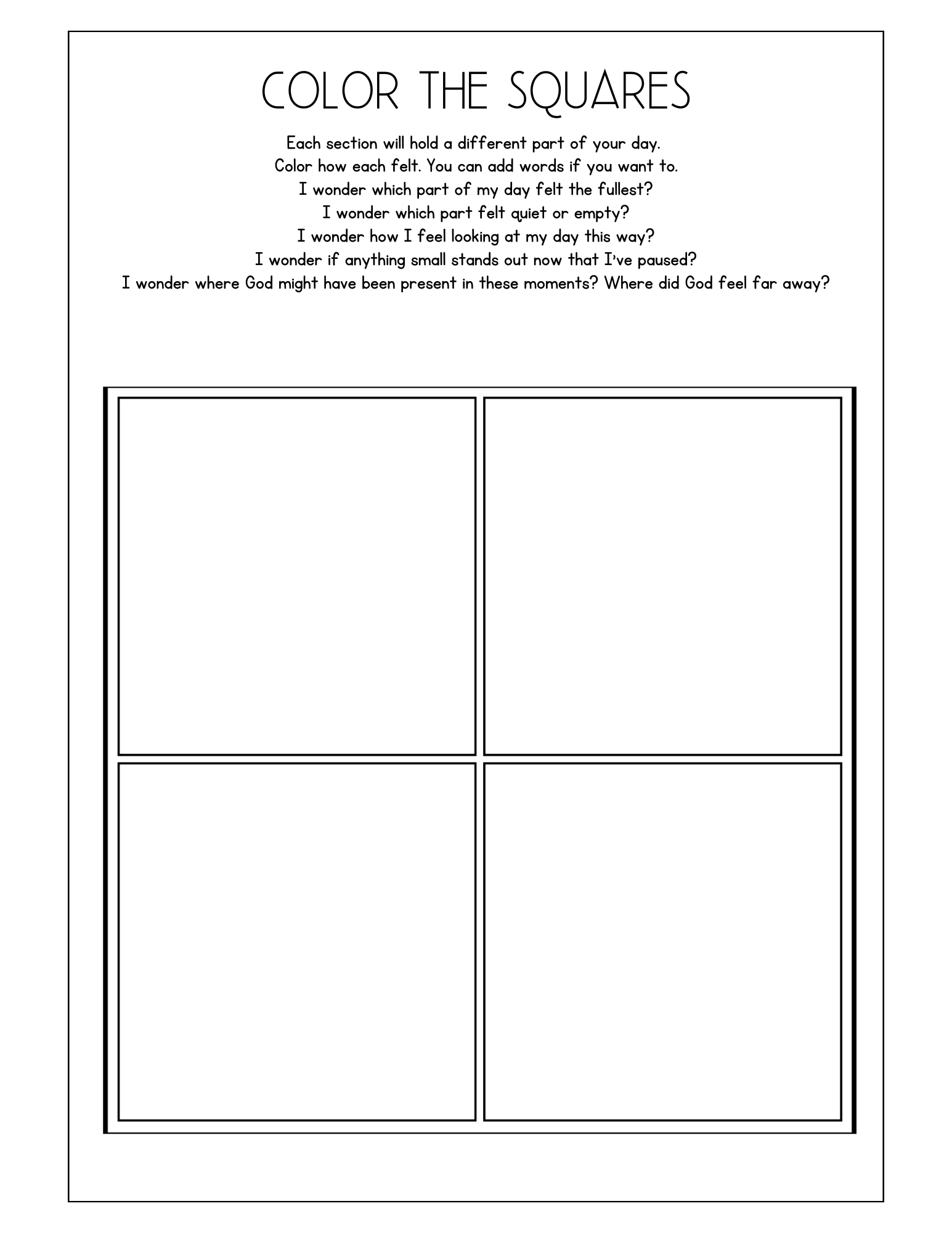
Draw a square on your page, or use this coloring page. Divide it into four sections. Each section will hold a different part of your day. You might choose:
morning, midday, afternoon, evening
orfour specific moments that stand out
Inside each section, draw or color what that part of your day felt like.
Not what happened, exactly, but how it felt.
Watercolor Option
Draw your square and divide it into four parts.
In each section, use color and simple shapes to represent that part of your day.
One might be bold and full.
Another might be pale or nearly empty.
Let the paint move freely. You don’t need details.
Pause between sections if you can. Let each one have its own space.
Colored Pencil or Crayon Option
Draw your square and divide it.
Fill each section with colors or patterns that match how that time felt.
You can press hard, go lightly, scribble, or keep it neat. Let the feeling guide your hand.
Wondering Questions
I wonder which part of my day felt the fullest?
I wonder which part felt quiet or empty?
I wonder how I feel looking at my day this way?
I wonder if anything small stands out now that I’ve paused?
I wonder where God might have been present in these moments? Where did God feel far away?
A Kid-Friendly Version
Invite kids to:
Draw a big square and split it into four parts.
Draw or color something from different parts of their day.
You can wonder together:
What happened in this part?
Which part was your favorite?
Which part felt quiet or slow?
Let them keep it simple, even one color per section is enough.
A Closing Invitation
When you’re finished, take a moment to look at the whole square. Four small sections in one day.
You might carry this wondering with you: What would it be like to receive my day as it was, instead of wishing it were different?
If you feel comfortable, I’d love to see what you create. When I share these prompts, I’ll always try to share what I’ve made too. Tag me on Instagram or comment below with a photo or reflection.