
Creative Lenten Practice, Session Three: Noticing what is growing
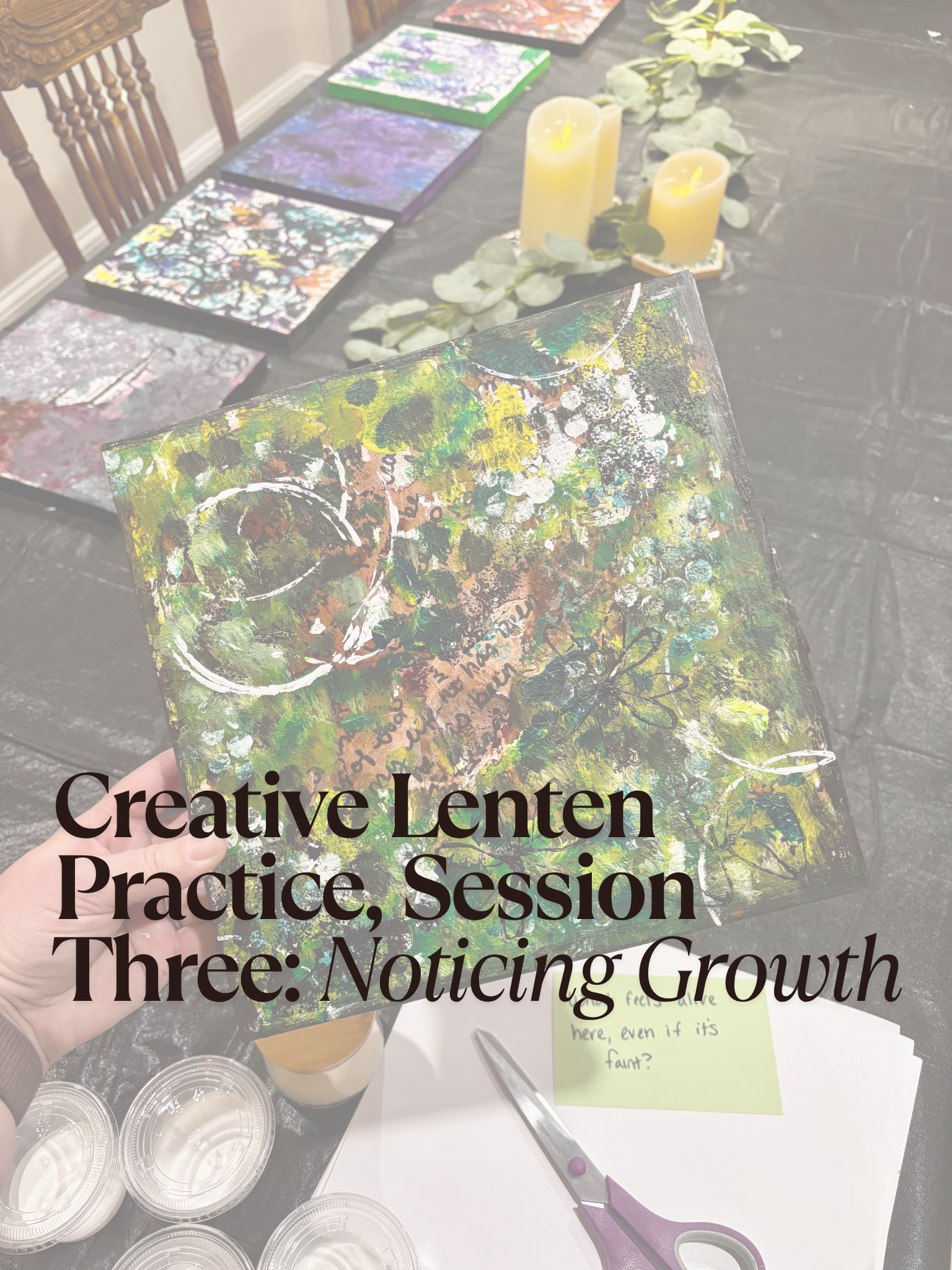
Lent is not only about what we release. It is also about what God is gently bringing to life within us.
In the Book of Isaiah we hear God say:
“See, I am doing a new thing! Now it springs up; do you not perceive it?”
Often, we do not perceive it right away. New life tends to emerge quietly, beneath the surface, in ways that are easy to miss.
Jesus often spoke about seeds — small things hidden in the soil that grow faithfully long before anyone sees them. Renewal rarely announces itself. It may appear as a small shift, a quiet hope, or a subtle longing for something more life-giving.
This practice invites you to notice those small beginnings.
You may want to set aside about an hour for the full practice, though you can shorten it if needed.
Supplies:
your previous project from session one OR watercolor paper
acrylic paint
paint brush
things to create texture (bubble wrap, stamps, paper towels, stencils, almost anything!)
Step 1: Prepare your body (5 minutes)
Make a cup of tea or another warm drink if you’d like. Sit somewhere comfortable and allow yourself to breathe slowly.
You might read these words from Ted Loder:
“I am so thankful to be alive—breathing, moving, sensing, wide-eyed, cock-eared alive—in this mysterious instant, at this luminous time, on this nurturing earth, this blue pearl of great price whirling through uncharted space, attended by vigilant stars…. I am…eager to miss no message of grace in the ballet of beauty or in the cramp of struggle of this incredible gift of life.”
Sit quietly for a moment and notice your breath.
Step 2: Reflect (5 minutes)
Read slowly:
Lent is not only about what we let go of. It is also about what God is gently bringing to life within us. New life often begins quietly. Seeds grow underground long before we see them.
Right now, we are not trying to force growth or create something impressive. We are simply noticing what feels alive, curious, or hopeful — even in very small ways.
This is not resurrection yet. It is the long, patient work of becoming. Trust that God’s Spirit is at work, even here.
Step 3: Journal (10–15 minutes)
Write freely in response to one or more of these questions:
Where do I notice something small beginning to grow?
What feels alive here, even if it is faint?
What might be growing beneath the surface, unseen?
What if I don’t need to force or finish this?
Write slowly and honestly.
Step 4: Add Color (15–20 minutes)
Take the paper you have been working with (or begin with a fresh sheet if you prefer).
Choose one or two colors. Using a brush or another simple tool, begin adding small strokes of color. Move slowly.
You might:
mix the colors together
create small marks or lines
stamp textures using simple objects
add a border around the edge of the page
Try to let the background remain visible. The earlier layers are still part of the story.
Move gently. This is not about starting over. It is about noticing what wants to grow here.
Let the colors emerge slowly.
Pause often.
Sit with each mark before making another.
Step 5: Sit and Wonder (5 minutes)
Before moving on, sit quietly with your painting.
You might reflect on one of these questions:
What was it like to begin without a plan?
What did I notice about restraint — using less, or stopping sooner?
When did the process feel most alive?
What feelings did the process evoke in me?
Did anything surprise me?
Just notice what arises.
Step 6: Practice Visio Divina With Your Painting (10 minutes)
Visio Divina means “sacred seeing.” It is a way of praying with an image.
Begin by quieting your thoughts and placing yourself in God’s presence. You might ask the Holy Spirit to guide your prayer.
Then slowly gaze at your painting.
Look
Notice the shapes, colors, textures, and spaces without trying to interpret them.
Notice
What draws your attention?
Is there a place your eyes return to?
Feel
What emotions or memories arise as you look?
What connections does the image make with your life?
Pray
Tell God what you are seeing and sensing.
Rest
Sit quietly with what has stirred within you.
Before finishing, you might ask yourself:
What do I want to remember about this time of prayer?
Step 8: Closing Blessing
You might end with this blessing from John O'Donohue:
May you know the slow
halting rhythm of growth
that grows in the seed
of your soul.
Amen.