
Creative Lenten Practice, Session One: Releasing
As Lent begins, we are invited into the wilderness, not to be emptied for the sake of emptiness, but to make room for God.
Through the prophet in the Book of Joel we hear the invitation: “Return to the Lord your God, for he is gracious and merciful.” Returning often begins with releasing: loosening our grip on what we’ve been holding tightly.
When Jesus Christ speaks of fasting, he describes it as something quiet and hidden, not performative. Fasting can mean setting aside food, but it can also mean releasing habits, expectations, or ways of being that no longer give life.
This simple practice is meant to help you begin Lent gently, by noticing what feels heavy and practicing release with both your heart and your hands.
You can set aside about an hour, or shorten it if needed.
Supplies:
pen/pencil/marker (for journaling)
sheets of paper (for journaling)
cardstock, watercolor paper, canvas, wooden board
Mod Podge (or glue mixed with water)
old paint brush
Step 1: Prepare your body (5 minutes)
Make a cup of tea, coffee, or another warm drink if you’d like.
Sit somewhere comfortable.
Before doing anything else, take a few slow breaths and quiet your body.
You might pray silently:
God, help me notice what I am carrying.
Let the silence be enough.
Step 2: Reflect (5 minutes)
Read slowly:
Lent invites us to return to God.
Returning often begins with releasing.
Tonight, you are not striving to become a better version of yourself.
You are simply noticing what feels heavy, clenched, or crowded.
You might imagine Jesus’ invitation:
“Come to me, all you who are weary and carrying heavy burdens.”
What might you be invited to set down, just for now?
Sit with that for a moment.
Step 3: Journal (15–20 minutes)
Write freely in response to one or more of these questions:
What feels heavy or clenched as I enter Lent?
What am I holding tightly right now?
What might I be invited to fast from, not to punish myself, but to make space?
What feels ready to be loosened, even slightly?
Don’t worry about writing something meaningful or polished, just be honest.
Step 4: Practice Release With Your Hands (15–20 minutes)
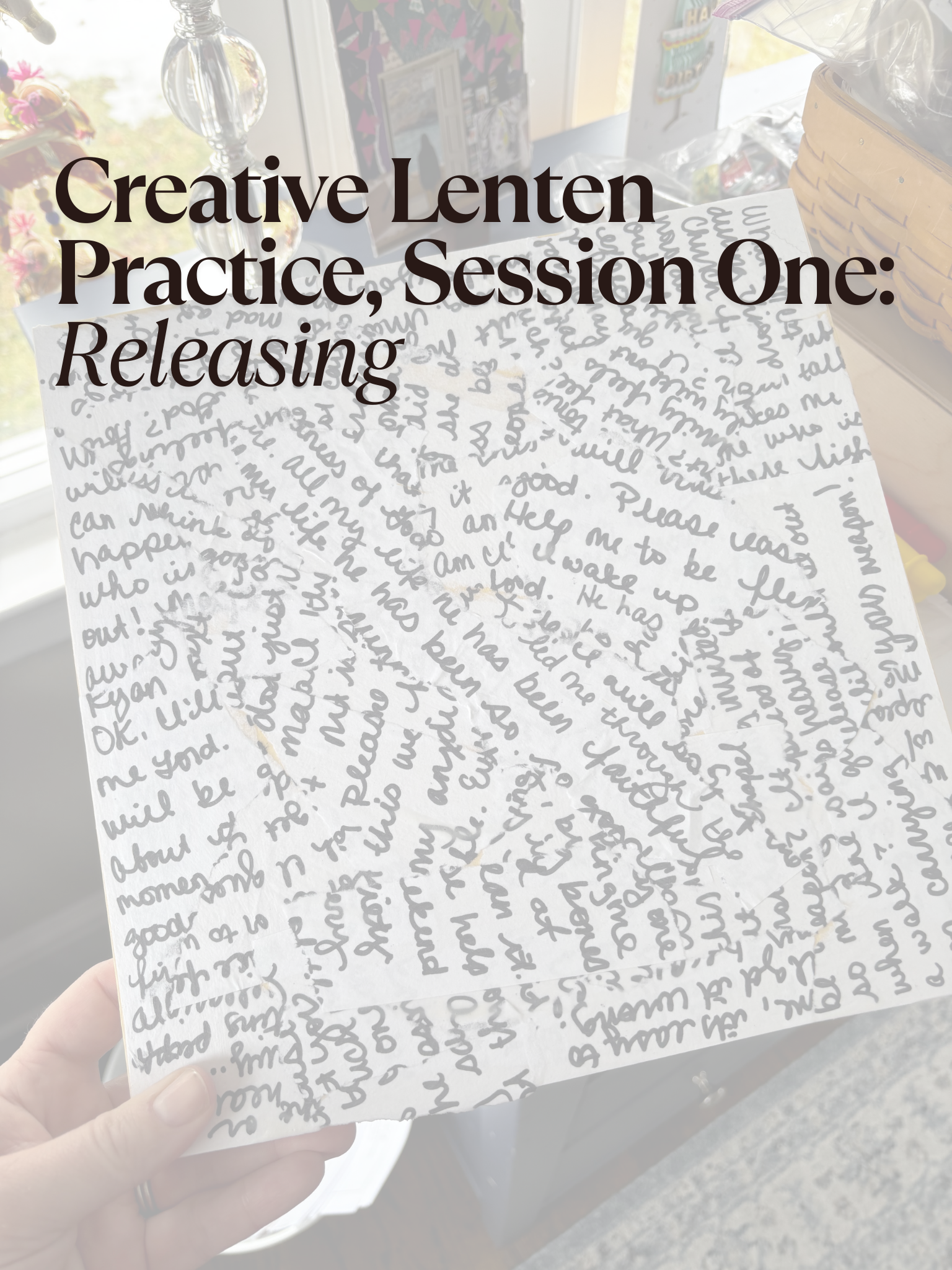
Take your journal sheets and slowly tear them into pieces of all different shapes and sizes. Notice the sound and notice your response.
Then take the pieces and glue or tape them onto your heavier paper or canvas to cover the whole page.
You are not trying to make something pretty. You are practicing release with your hands. Let this be prayer.
Step 5: Sit and Wonder (5–10 minutes)
When you’re finished, sit quietly and notice what is present.
You might reflect on one of these:
I wonder what it felt like to write those words.
I wonder what happened inside me as I decided what to tear.
I wonder what the sound of ripping stirred in me.
I wonder what I noticed in my body as I pulled the paper apart.
I wonder what it was like to place the torn pieces down in a new way.
I wonder what God is inviting me to notice in this process?
There is nothing you need to figure out. Just notice.
Step 6: Close
You might end with this simple prayer:
God, receive what I have released.
Hold what I cannot yet let go of.
Make space in me for your life.
Amen.
Allow your piece to dry and keep it for session two, next week.