
Creative Prompt: Write One Word with Your Non-Dominant Hand
A practice for loosening perfectionism and making space for wonder
Most of us were taught, early on, how to hold a pencil correctly, write neatly, and color inside the lines. Over time, that training can quietly turn into something heavier: the belief that our work, and sometimes we ourselves, need to look a certain way to be acceptable.
Today’s creative practice invites us to lay that down, just for a few minutes.
Instead of striving for beauty or clarity, we’ll practice receiving.
Instead of control, we’ll practice attention.
Instead of perfection, we’ll practice wonder.
Choose a single, gentle word. Something simple. Something kind.
Some ideas:
rest
light
here
beloved
enough
peace
home
Using your non-dominant hand, write that word slowly on the page, letting it be imperfect. Resist the urge to fix it! When the word is written, add color around the word, not inside it. Let the word remain as it is.
Watercolor Option
Lightly write your chosen word with your non-dominant hand using pencil or pen.
Take watercolor and add soft washes around the letters.
You can let color pool near some letters and fade away from others.
You can use one color or many.
Let the paint respond to the word rather than illustrate it.
When you’re finished, pause before adding anything else. Notice what’s already there.
This is not about making the word pretty; it’s about letting it be.
Colored Pencil or Crayon Option
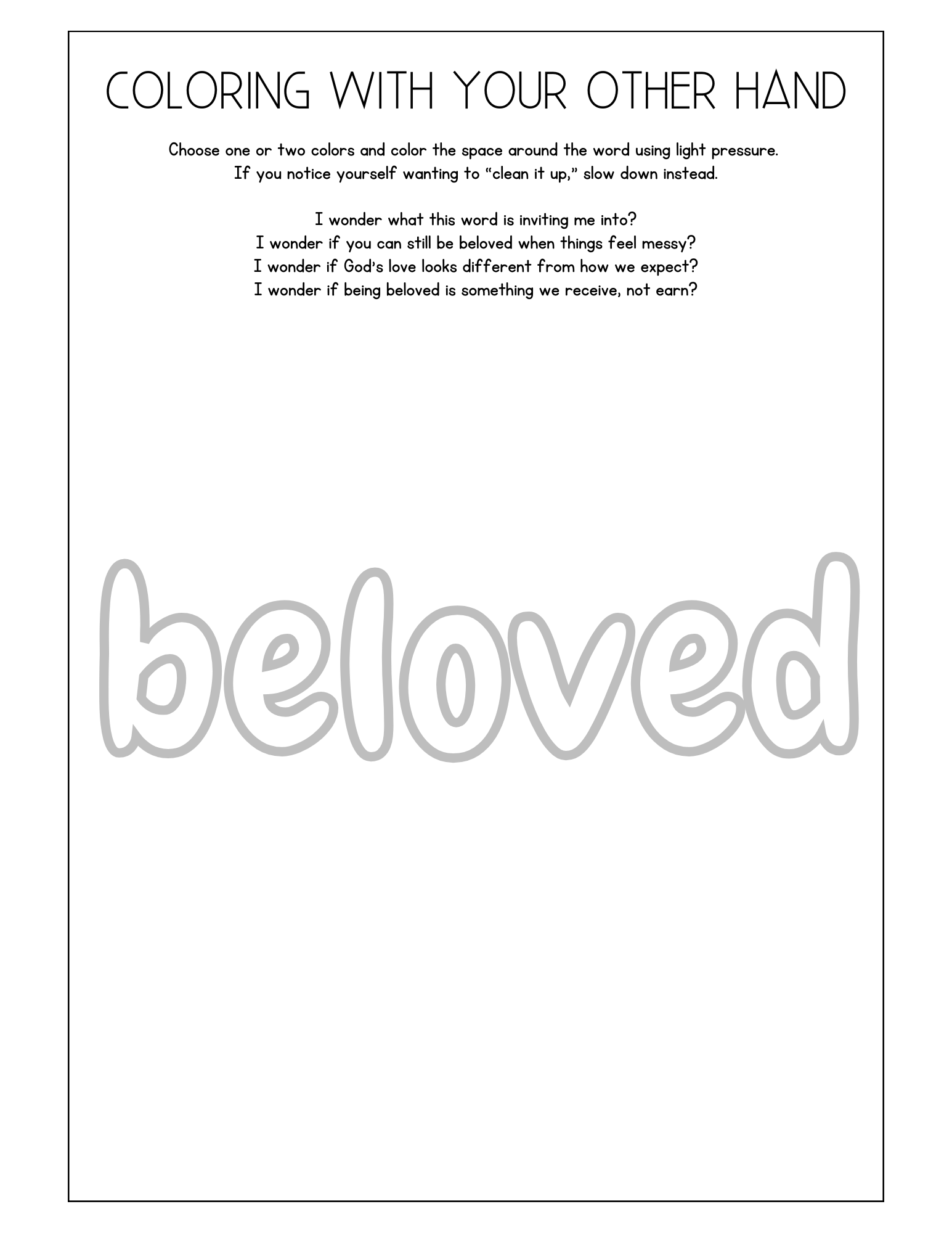
Write the word with your non-dominant hand, or use this coloring page and the word “beloved”.
Choose one or two colors.
Color the space around the word using light pressure.
If you notice yourself wanting to “clean it up,” slow down instead.
The uneven lines and imperfect letters are part of the practice.
Wondering Questions
You might hold one or two of these gently as you work or return to them afterward.
I wonder how it feels to write without trying to get it right?
I wonder what this word needs from me today?
I wonder if this word feels different when it’s imperfect?
I wonder what happens when I don’t correct myself?
There are no right answers. Let the questions stay open.
A Kid-Friendly Version
Invite kids to:
Pick a word they like (or help them choose one).
Write it with their “other hand” or let them guide your non-dominant hand as you write.
Color around it any way they want.
You can wonder together:
What do you notice about your letters?
Was it hard or funny to use your other hand?
What does this word make you think of?
Celebrate the wobbliness. Laugh if it feels silly. This is part of the gift.
Why This Practice Matters
Using our non-dominant hand interrupts our habits of control and slows us down. It quiets the inner critic that says, This should look better than it does. In that interruption, something else becomes possible.
Wonder. Gentleness. A posture of receiving rather than proving.
Like entering the kingdom as a child, not because we’ve mastered something, but because we’re willing to be small, open, and attentive.
A Closing Invitation
You might place your finished page somewhere you’ll see it later. Not as a reminder of what you should do, but as a witness to what happens when you let go. Sometimes the most faithful thing we can do is stop trying to make things right and simply allow ourselves to be here.
If you feel comfortable, I’d love to see what you create. When I share these prompts, I’ll always try to share what I’ve made too. Tag me on Instagram or comment below with a photo or reflection.