
Showing Up Without Knowing: A Spiritual Discipline of Wonder
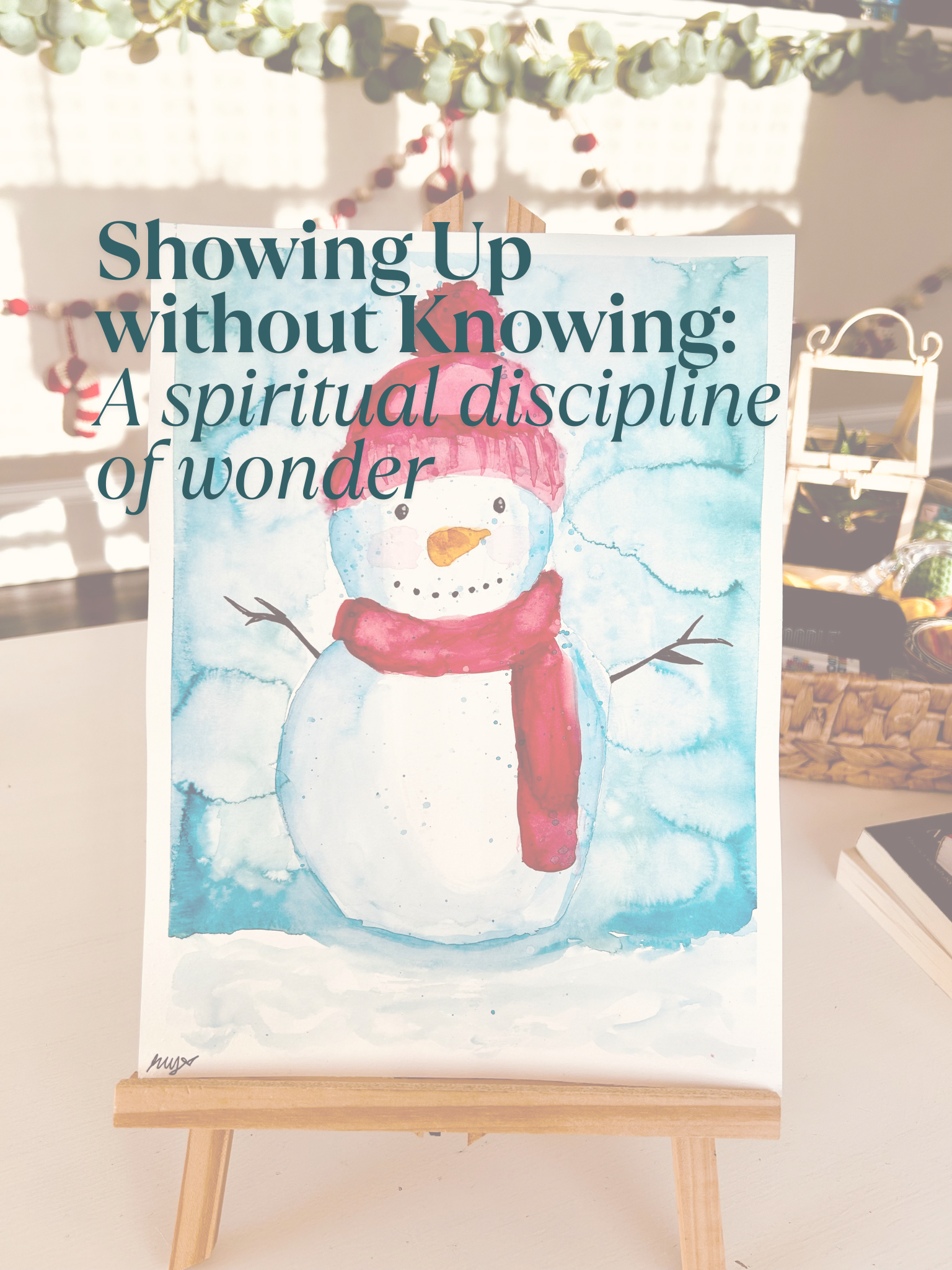
I keep asking the same question: how do you create and play?
This is not a soft question or one I just ask for fun. I ask it because I want us all to foster spaces of creating and playing. These habits shift our posture from certainty to wonder and help us approach God that way, too.
Wonder is not the absence of faith; it is a way of practicing it. It loosens our grip on mastery and polish, releases the need to be right, and allows us to stay open to God, to ourselves, and to what is still becoming.
Practices like creating, playing, and simply being with God in silence are profoundly formative. They teach us to come with curiosity instead of control, to listen more than we explain, and to trust that God meets us not only in clarity but also in beginnings, questions, and unfinished places.
Jesus pointed to a childlike posture not because children understand more, but because they receive more. They enter without needing certainty first. They engage before they comprehend.
Yesterday, in my spiritual direction group, we spent a long time in silence (a gift in itself) before I shared. They listened, cried, and prayed with me. When we ran out of time, I felt a pang of panic: I was the only one who got to share, and I wanted to repay them somehow. But they gently reminded me that perhaps God was inviting me to simply receive that day, from Him and from a safe, trustworthy group of friends.
Wonder restores that posture toward God in us. Intellectual knowledge and theology certainly have their place. I am deeply grateful for my years of studying Scripture through Christian education; I don’t think I would discern God’s voice as I do without it. Yet we are often tempted to approach God with certainty because of all our knowledge: answers already formed, conclusions already drawn, or outcomes already imagined. Certainty feels faithful. It feels responsible. But certainty can quietly turn into control, and control leaves very little room for God to move.
Wonder creates room.
As a spiritual discipline, wonder looks like creating without knowing the outcome, praying without demanding answers, and trusting God enough to remain open. It is choosing presence over polish, receptivity over mastery, and faith over control.
In a world that rewards certainty, wonder becomes a quiet act of trust, and practices like creating and playing help us cultivate it, shaping our hearts to stay open and receptive to God in all moments.