
Chapel Talk: Praying with our Imagination
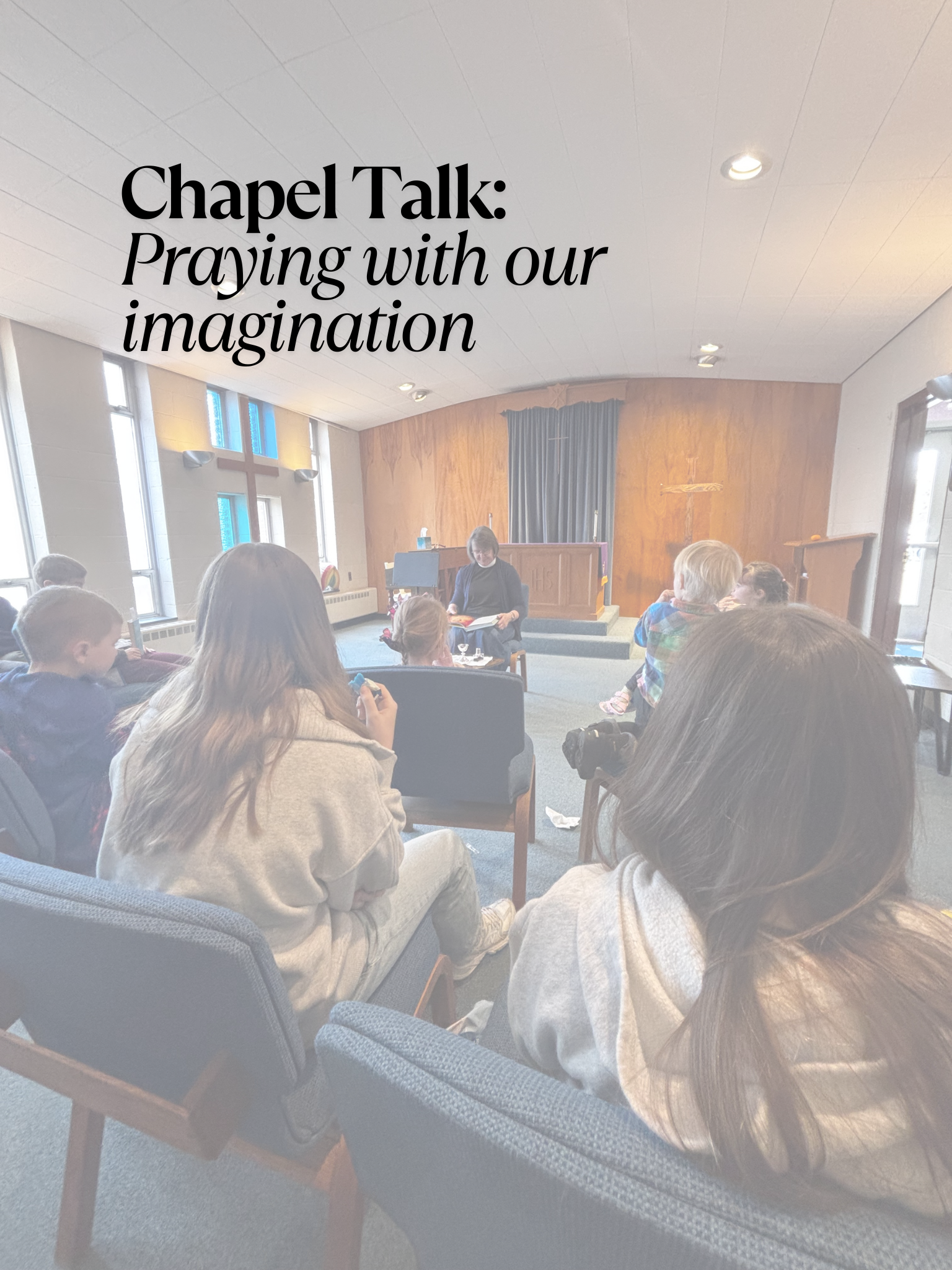
Deacon Jan teaching Apostles’ Kids about communion.
This past week, I got to speak in chapel at a local Christian school—first with grades K–2 and then again with grades 3–5—and I decided to teach them about imaginative prayer. I told them that I didn’t learn how to do this until I was 40 (they gasped in horror!), but I actually think kids are much better at it than adults because they have such wonderful imaginations.
The same imagination that helps children enter a story or a game of pretend can also help them step into a Bible story and notice Jesus there.
At the end, we took it one small step further, and I said very quietly, “Now imagine Jesus noticing you. [pause] What do you think his face looks like when he sees you?”
The room was silent. The wiggling had stopped. In that moment, I could feel that they had fully entered in.
Then I asked, “Do you think he is smiling?”
With their eyes closed, they all nodded vigorously and said, “Yes!”
And I thought, Lord, help me to enter in just like that. To believe, with my whole heart, that you smile when you notice me in the crowd.
So here is what I told them, in case you’d like to try it at home.
Sometimes people think prayer is only talking to God. And talking to God is definitely part of prayer! But prayer is actually three things.
Prayer is:
Talking to God,
Listening to God,
And being with God.
When we pray, we can do all three of those things. Sometimes we talk to God and tell him what we are thankful for or what we need. Sometimes we listen quietly. And sometimes we are just with God, knowing that he loves us.
Today I want to show you a way to pray that uses something God gave you that is very special: your imagination. Your imagination helps you picture things in your mind. When we read stories in the Bible, we can imagine being there in the story with Jesus.
Let’s try it together.
Imaginative Prayer
I’m going to read a short story about Jesus. While I read it, you can quietly imagine the story in your mind. You can close your eyes if you want, or just sit quietly. Imagine that you are there. You can be a character in the story or you can just be watching it happen from the side. As you are there, try to engage all your senses. What does it look like or smell like? How do you feel being there?
Read: Jesus Welcomes the Children
(Mark 10:13–16 or children’s Bible version*)
Now imagine the story again for just a moment and think about these questions quietly in your mind.
Where are you in the story? Are you one of the children running to get to Jesus? Or are you one of the shyer ones waiting behind?
Are you close to Jesus or farther away?
What do you see around you?
Now this is the best part: imagine Jesus noticing you.
What do you think Jesus’ face looks like when he sees you?
What do you think it feels like to be welcomed by Jesus?
Now you can finish this kind of prayer by saying something to Jesus in your heart.
Closing
Prayer can be talking to God, listening to God, and being with God. And sometimes when we read Bible stories, we can imagine being there with Jesus and listening to Him in a new way.
Jesus, thank you that we can talk to you, listen to you, and be with you.
Thank you for welcoming us and loving us.
Help us notice you this week.
Amen.
*I used the story “A Wide and Wiggling Wall” from the Book of Belonging on page 219. This story worked perfectly, because they actually talk about children’s imaginations and include a few wondering questions.