
Already Beloved (repost from 2023)
I’m resharing this reflection today, not because it’s old, but because it’s still very much alive in me. The patterns I write about here don’t disappear once they’re named; they soften through practice, grace, and repetition. This piece sits at the heart of the work I do now: creating space to release striving and to rest more fully in what is already true.
“May I invite you to drop the old names, come out from under the shame that tries to hinder your intimacy with God and others, and step onto the spacious path. Child of the living God, sing to the living God.”
—Tamara Hill Murphy, The Spacious Path: Practicing the Restful Way of Jesus in a Fragmented World
A couple of months ago, I wrote about shedding old coping mechanisms: learning to live more intentionally and to walk in truth. Today I want to write about another one. This has been a longer journey for me, with many iterations.
It began, as it so often does for me, with an awkward encounter with an acquaintance.
In the past, I would have left that interaction and verbally berated myself, cataloging how weird and awkward I am, asking myself what is wrong with me. Looking back, I feel sadness for how cruel I was to myself. If someone else had said those things to me, it would rightly be called abusive. I am grateful to say I’ve moved past that pattern, as it was a more obvious affront to God and His good work in me.
But as I fought that old habit, it morphed into something subtler. A thought crept in, embarrassing to admit: Wait until I lose weight. Then they’ll want to be friends with me. It lived mostly below the surface, but it offered a false hope that someday I’d be better, more deserving of love. As God slowly convicted me of loving myself as His image-bearer, I realized this too was unhealthy, and I began to fight it as well.
Eventually, that thought shifted again into something even quieter: Well, that was awkward, but wait until (fill in the blank). I had grown more comfortable with my body, but I still wasn’t content with simply being myself.
It took me a while to recognize this pattern. I had shed the verbally abusive thoughts and the fixation on my weight, but I was still placing my hope in a false promise: that someday people would love me for my accomplishments. I was idolizing a future version of myself to soothe the fear of offering my true self, right now, take it or leave it.
But the Holy Spirit is faithful. In time, He revealed this too, and I believe it was to lead me right here.
After another awkward encounter recently, I caught myself mentally scrambling for ways to prove I wasn’t actually a weird person. I can be fun. I am a good friend. I give good gifts! (Yes—these were literally the thoughts running through my head.) I imagined texts I could send, favors I could offer.
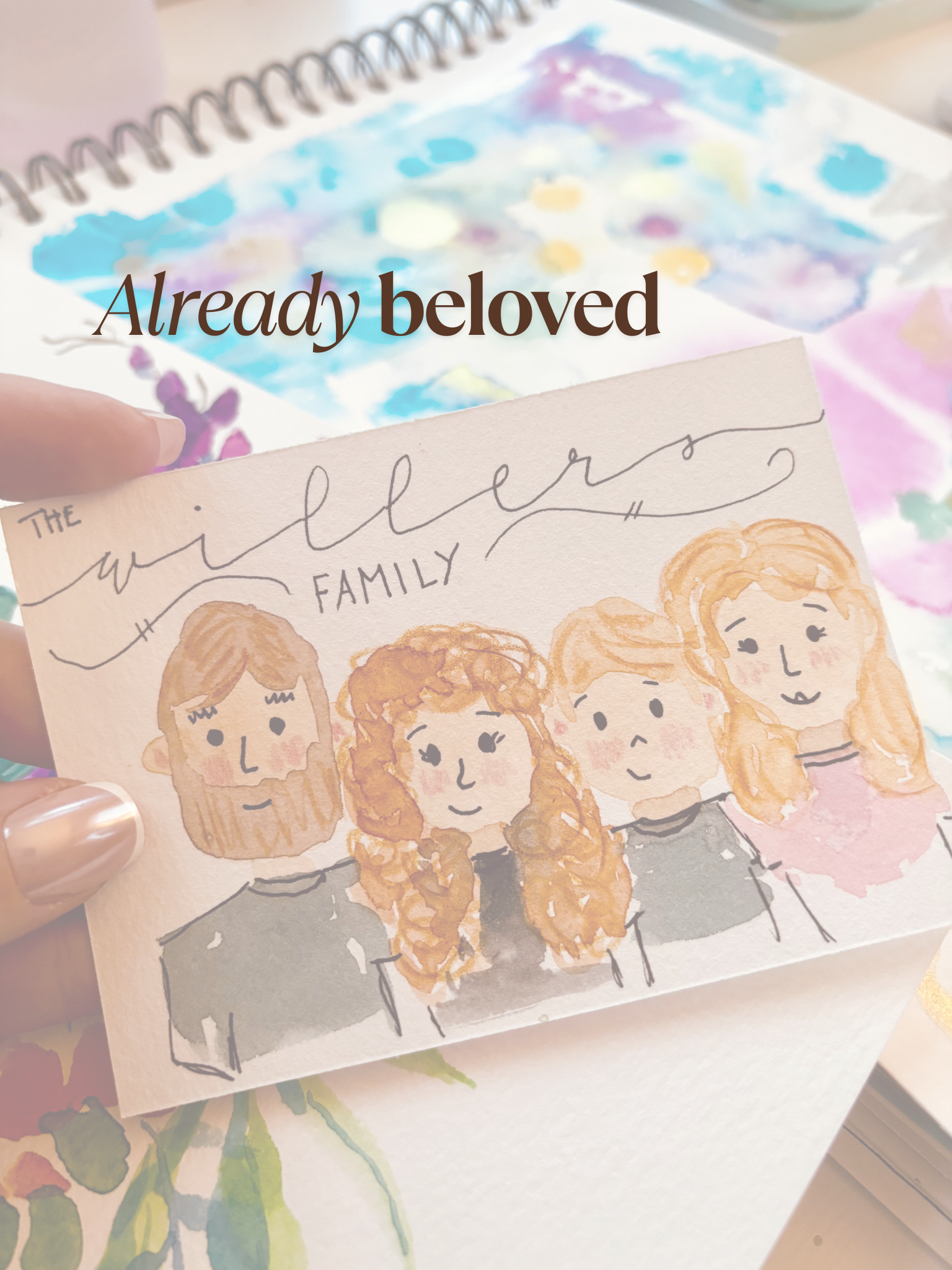
And then it hit me: I am already beloved.
I don’t have to prove myself to anyone. People can accept me (or not!) for who I am: broken, fragile, real. Because the good news is this: I am already beloved.
I am already beloved.
It has taken me a long time to feel how restful this truth is. I can stop striving and simply rest in my belovedness. And the beautiful irony is that the things I was trying to prove are already true. I am a good friend. I can be fun. I do give good gifts. I am a good and beautiful creation of the God of the universe. And most importantly, I was loved by Him before I ever came to be.
Tamara Hill Murphy puts it this way in The Spacious Path:
Our parents name us at birth, and God gives us our forever name at the second birth of baptism. In baptism, we step into the water of death with Jesus and are raised with him, the beloved. Because belovedness begins in God, we do not name ourselves beloved; instead, we receive the name—the reality of ourselves, fully seen and loved by God—as a gift.
Our temptation is to live as if we are beloved without letting the truth sink down into the true state of our souls. We may believe God loves us, but we haven’t allowed that love to help us discover the truth about ourselves. Any rest we feel that doesn’t help us discover the truth about ourselves is a false rest.
And oh! the rest and freedom that come from truly believing this. No more coping mechanisms after awkward encounters. No more striving to secure belonging. Instead, I am learning to settle into the truth of my belovedness.
I am grateful that my parents gave me the name that means beloved. And even more grateful that God calls me His beloved. And I am learning, slowly and imperfectly, to let that name sink from my head into my heart.
A gentle invitation: As you move through your own ordinary days, especially the moments that leave you replaying conversations or wishing you had been different, notice what name you give yourself. If you’re willing, try setting that name down. See what it might be like to rest, even briefly, in the truth that you are already fully seen and deeply loved. You don’t have to earn your place here. You are already beloved.